Undergoing surgery to fix my Silent Reflux and Chronic Cough.
Back in 2008 I noticed I had an irregular but irritating cough, and three years later I saw my GP about it. Over the next four years I had a laryngoscopy, speech therapy, and an x-ray but nothing was found to be a problem. By 2015 the cough was getting seriously worse. I was having coughing fits that were persistent and long making it hard to catch my breath. These fits were causing pain and were so hard my back would go. I was then prescribed antacids, then antihistamines, another x-ray, and then a spirometry test, but nothing worked.
My GP diagnosed Reflux and Reflux Oesophagitis (inflammation of the oesophagus caused by reflux) and prescribed Lansoprazole, Gaviscon, and Prednisolone, then sent me to ENT. The consultant diagnosed Laryngopharyngeal Reflux – Silent Reflux and said some damage around my vocal chords will likely be permanent.
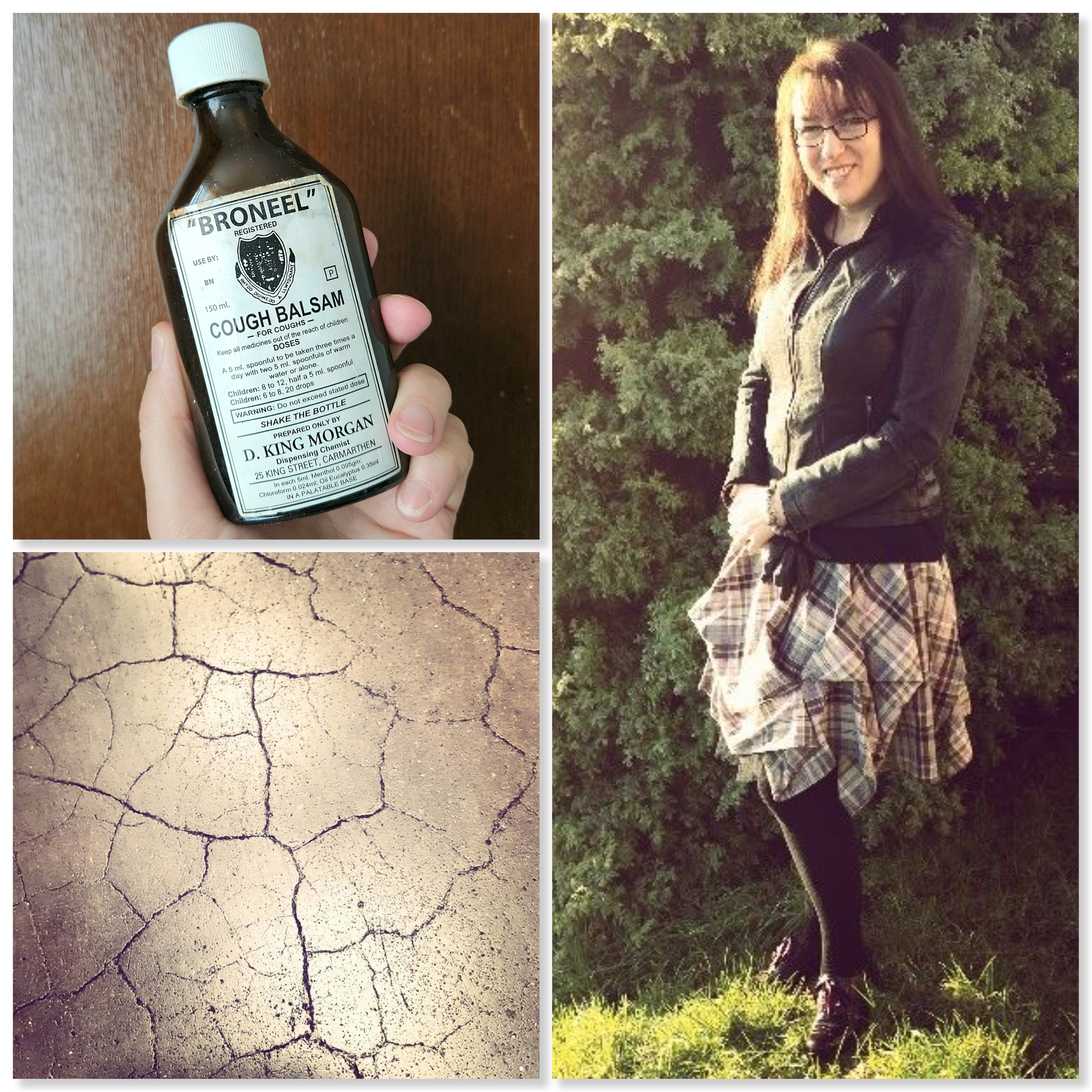
In 2019 after prolapse diagnosis I was referred to Gastroenterology in case my prolapse was related to my persistent cough and Silent Reflux. A year later, another consultant, a Heliobacter pylori blood test, which came back clear, and another chest x-ray. I was told my persistent cough was much worse and impacting my prolapse. I was prescribed Omeprazole every day and Gaviscon every night, and the PPI was soon increased to 40mg a day from 20mg as I was struggling to breathe through severe coughing fits. He then switched my PPI up to Esomeprazole 40mg instead of Omeprazole. A couple of months later my then GP told me nothing was changing and I’d have to go back to Omeprazole and “just live with the reflux and cough.”.
I was scared that if the cough wasn’t brought under control my impending prolapse repair surgery would ultimately fail. A new doctor referred me back to Gastroenterology for an Endoscopy and to see what surgery might be offered.
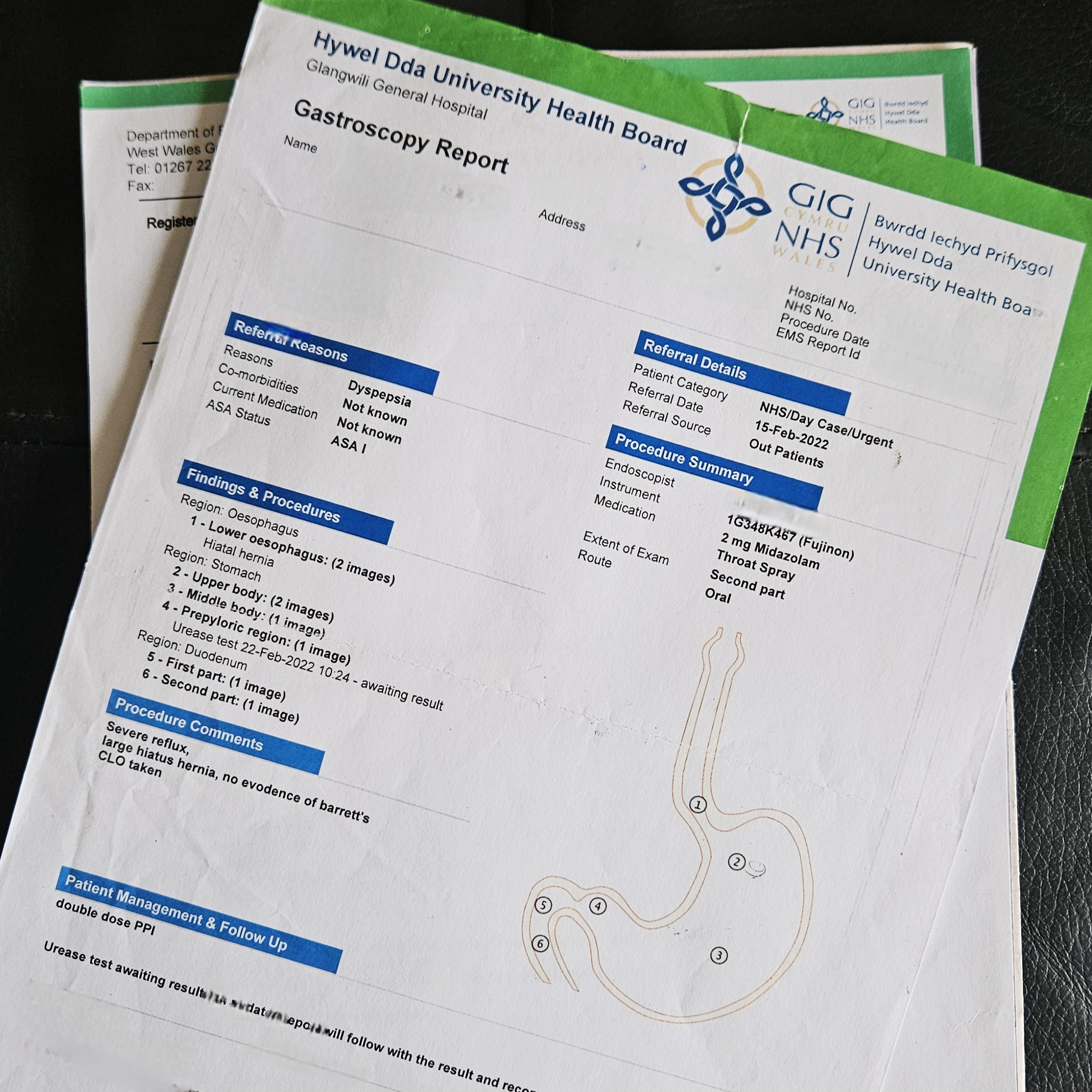
Seven months later I went in for an Endoscopy. I was off reflux medication in preparation and suffered horrific reflux, constant burn, heartburn, indigestion, vomiting, bloating, noisy belly, and chest pain. Constant coughing which pulled on my prolapse, and I couldn’t sleep for acid in my oesophagus all night. The results of the Endoscopy showed severe Reflux, large hiatus hernia, but no evidence of Barrett’s (Barrett’s oesophagus – a condition where cells in the lining of the gullet become abnormal and can lead to cancer), which was a relief. Another Heliobacter pylori test was clear, and I was told to continue with my double dose PPI and Gaviscon. I was told there was no operation to repair my loose stomach valve, to fix the constant leak of stomach acid, available to me.
I went through that year, 2022, with my chronic cough causing breathing difficulties. I was sucking throat lozenges with Hexylresorcinol antiseptic and anaesthetic to help control my cough, and Tic Tacs whenever my throat was too dry and tickly. Another doctor at the practice said that Omeprazole and Gaviscon should stop symptomatic reflux. He sent me for another chest x-ray, and then re-referred me to Gastroenterology and Reflux specialist to see what they could do about my hiatus hernia and reflux cough.
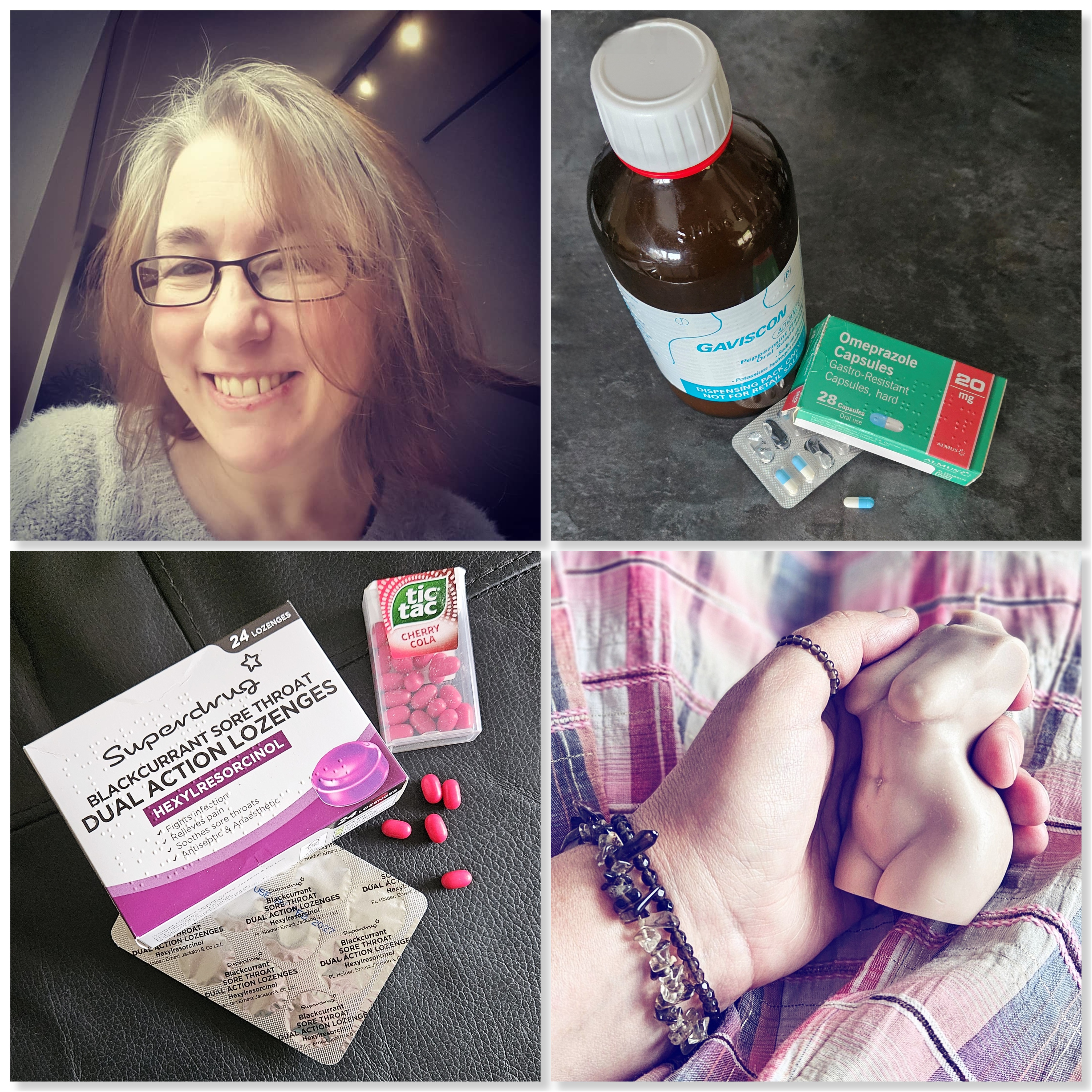
My chronic cough was getting progressively worse. I had coughing fits every day, causing vomiting after food, and inflammation closing my oesophagus and windpipe making it difficult to breathe, which was incredibly scary, and resulted in a rush to A&E when I couldn’t breathe after a coughing fit. At A&E they did blood tests, lung ultrasound, chest x-ray, and an ECG. All were clear, though they could see that I could barely breathe my SATs were all at 100% so enough oxygen was getting through to breathe. I tried to explain that my cough closed up my airway with inflammation, but once I could breathe again, they just told me I was having a panic attack. I felt really embarrassed, invalidated, and despairing. I mean, it was obvious being unable to breathe would cause panic, but my airway was inflamed and I couldn’t stop it.
I desperately did my own research on surgical intervention, and returned to the doctor’s practice to ask if I could get Fundoplication surgery, but was told that it was very unlikely. It was just after Covid and my new GP told me that hospitals weren’t doing surgeries that weren’t totally necessary, but she did re-refer me anyway with a request for surgery. She also advised me to research private surgery instead.
I knew that I couldn’t go on as I was. My body was in constant discomfort, spasm, and pain with every cough, and my depression and anxiety with the situation was growing. Vince and I talked about the situation knowing we didn’t have money for private surgery, but my quality of life was suffering so badly, that he suggested we take some money from his pension and a loan to cover any private funding. It was a really big step. I was still waiting to see another gastroenterologist on the NHS, but we decided to check out a private surgeon for advice while we waited.
In early 2023, I saw a general surgeon, who specialised in reflux surgery, at Sancta Maria private hospital in Swansea. I explained my reflux diagnosis, my fifteen-year-old chronic cough, and my resulting multiple prolapses. He was lovely and very informative. He did offer Fundoplication surgery, but wanted to conduct his own tests to see if I was actually suitable for the option. He also explained that though my cough had been linked to my silent reflux, he couldn’t guarantee that surgery would get rid of it. The private appointment cost £240, and he sent me for a Barium Swallow test, and pH level and Manometric tests to check the acidity in my stomach. I accepted these tests via the NHS, so would wait for them as he referred me.
A month later I went into hospital for Pelvic Floor and Prolapse surgery and a Hysterectomy on the NHS. I desperately wanted this surgery to work, and it was scary knowing I still had my cough.
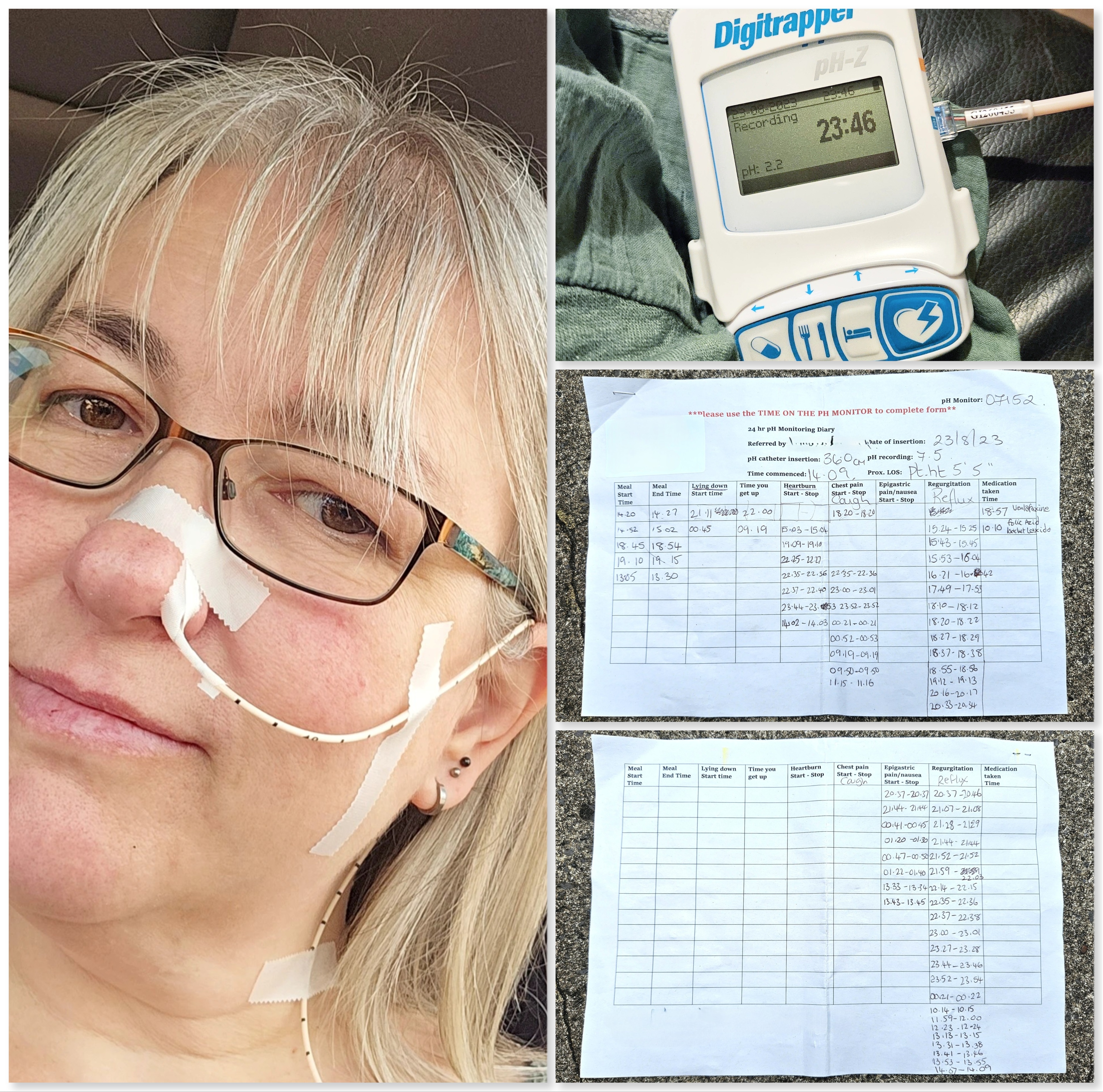
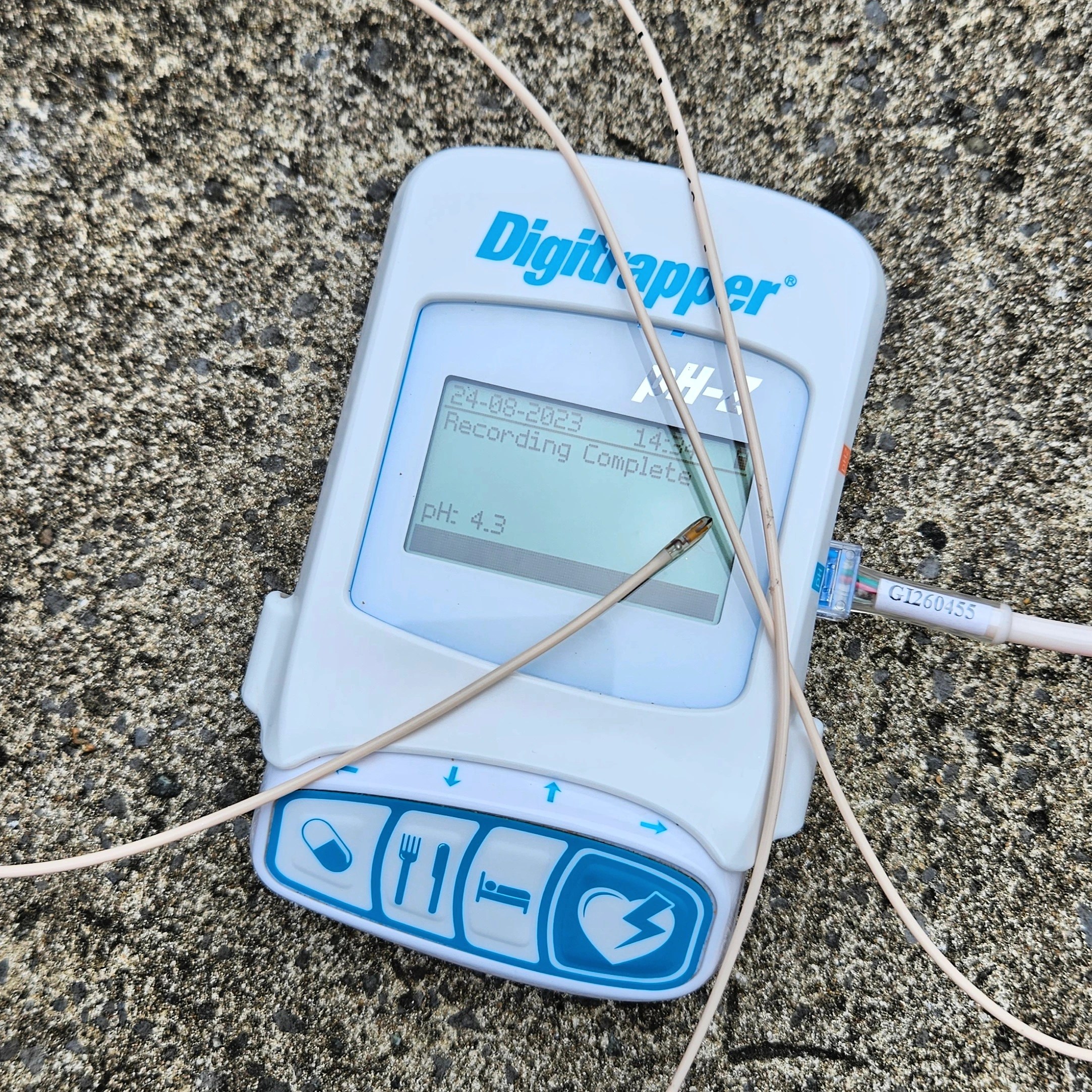
Two months after that I had my Barium test, which showed no abnormality in swallowing. Four weeks later, I went to Port Talbot hospital for my Manometry tests. The Manometry test was to swallow a narrow tube to check my swallow muscles. I couldn’t swallow the tube at all, my gag reflex made me cough and vomit, and in the end after trying for a while the nurse decided to stop the procedure as my Barium test had already shown no issue with swallowing muscles. Instead, I only had the pH acid level test. A much smaller tube, 1-2mm, was inserted up my nose and down my oesophagus with a sensor at the base of it which rested at the bottom of my throat. This was attached to a monitor that I would wear for 24 hours. It was to measure how far up my oesophagus my reflux acid went and how acidic it was. I was told to eat things that I normally couldn’t – like chocolate, fried chicken, pineapple etc – to get accurate readings of stomach acidity.
Oesophageal acid pH levels should be a 7 on the scale, but if they dropped below 4 that would indicate strong/bad levels of acid. I had to keep a diary of episodes of reflux and coughing and the scores on the monitor. Most of my readings were between 2 and 4 and reached a low of 2.1pH, so I was definitely getting severe reflux. I finally felt validated.
Back at Sancta Maria hospital and my surgeon said the acid levels were definitely clear enough to warrant surgery, but he was still wary of whether it was causing my cough, so he referred me to Respiratory on the NHS to check everything that might cause a cough. He was very surprised I hadn’t already been offered these tests by my GP.
Within a week my GP had tried an asthma inhaler after another spirometry test, but no change. Five days later I got my Gastroenterology appointment I’d been referred for a year ago. The consultant was so good, and listened to my full history. He looked at my results of the tests I’d recently had from private referral, and explained the Fundoplication surgery in full for me. He told me I was a good candidate for the surgery on the NHS, but he said he couldn’t advise it because at that current time the surgery wasn’t deemed ‘life-saving, but life-style’. The NHS was only considering essential surgery after Covid and the waiting list would be well over 7 years. He advised me to continue with the private option if I could afford it.
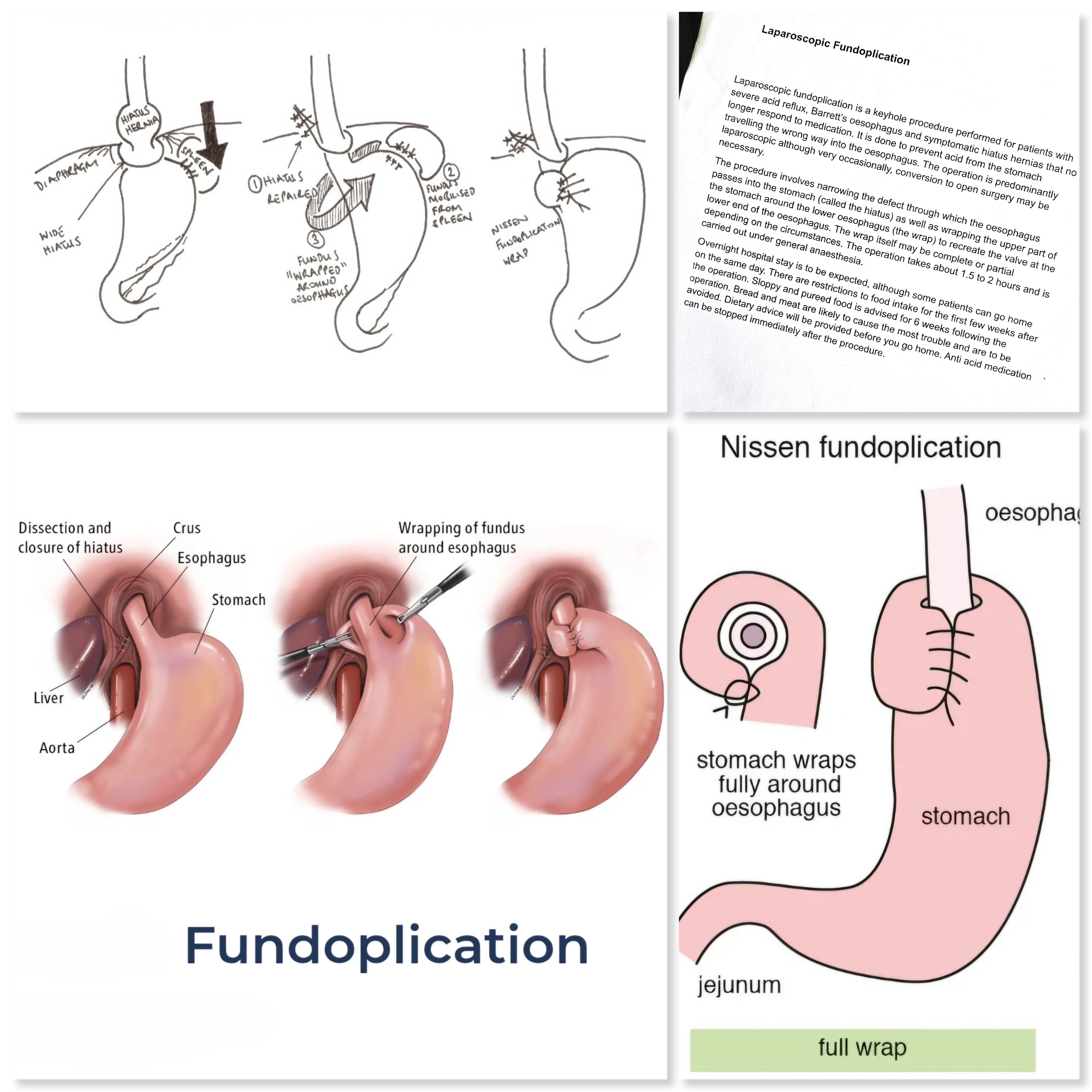
He also explained that Fundoplication surgery (folding the top part of the stomach around itself, like a scarf, and stitched together to tighten the stomach valve and prevent acid escaping into the throat), had a 33% chance of complete success, 33% chance of success which lessens as the years go by but could be controlled by PPIs, and 33% chance of short-term success to no success. So, that was a definite consideration.
I had a plethora of respiratory tests: breathing and lung capacity, inhalers, blood tests for allergies – dog dander, mould, dust, etc, but no markers showed up, nasal inhaler for post-nasal drip, and turbo inhalers. After six months I had my last breathing test. A breathing exercise on a machine with a drug that gradually tightens your windpipe making it harder to breathe if you’re asthmatic. The drug is doubled each time, but my breathing remained steady and not affected, so I was finally cleared by my consultant and my cough was not caused by lung or respiratory issues.
Back at the private clinic and my surgeon agreed to do my Fundoplication. Prices were scary. The Professor’s fee was £2,900, anaesthetist £500-700, and £5560 for the hospital. Around £9K for surgery. That was a huge amount for a small income family, but taking out of our pension and taking out a loan would have to do.
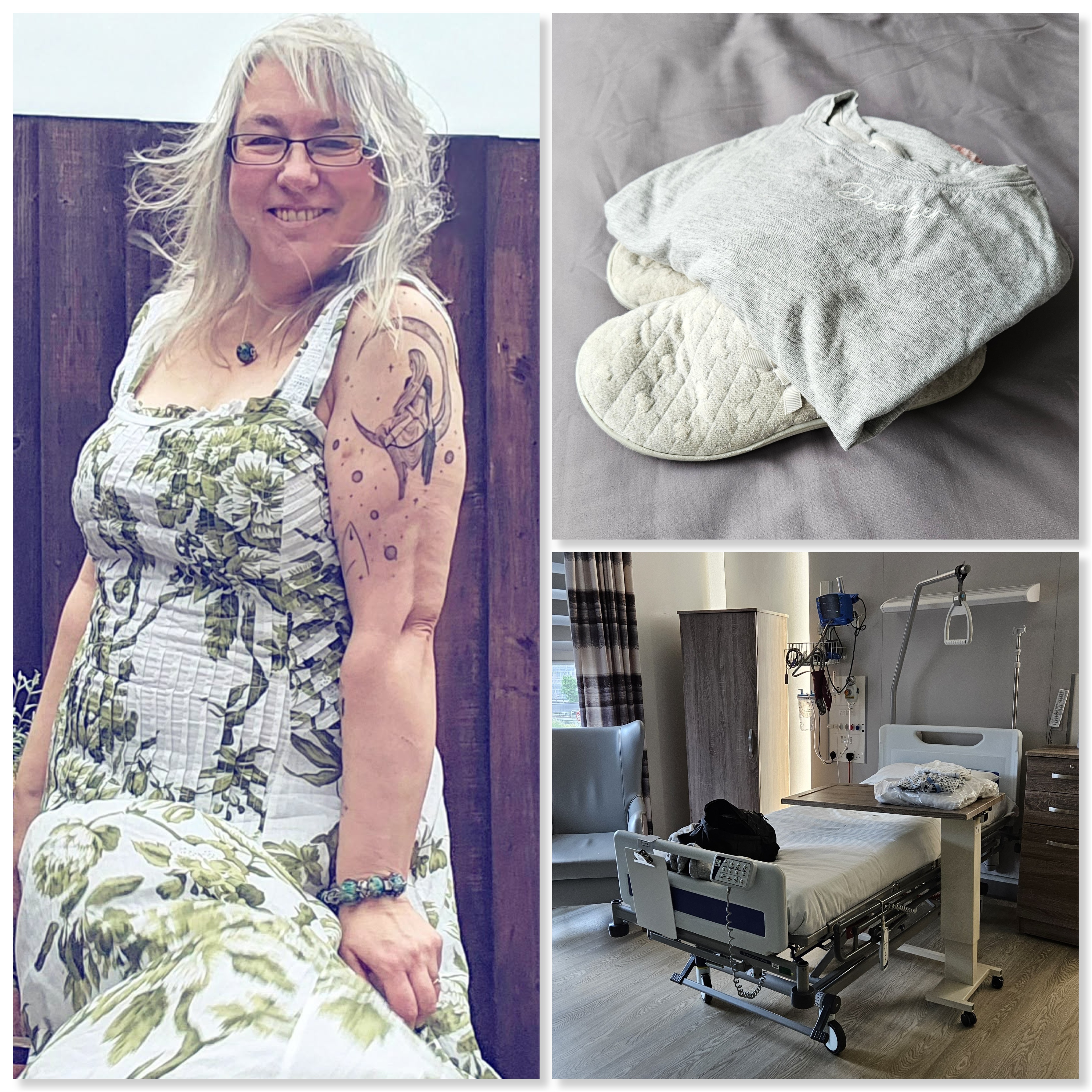
I finally went in for surgery in July 2024.
The private hospital was very different to its NHS counterpart. It was quiet, staff had more time, it was fully air-conditioned – which during the height of summer was luxury, and when I went in at 7am I was met, given a spacious room of my own with a television and private bathroom. I actually felt guilty being there!
I had pre-surgery checks, a gown, and compression socks, then I met my anaesthetist and they walked me down to the surgical suite with my nurse at 9.45am. My surgeon spoke with me before I was anaesthetised and taken into the operating room.
As with previous surgeries, I briefly recall coming round, but no memory of ending up back in my room. I t was 12.45pm when I became aware of my surroundings. I waited for lunch time, but my nurse reminded me that all I needed to do was ask for food, no set times like NHS hospitals, and I was brought soup.
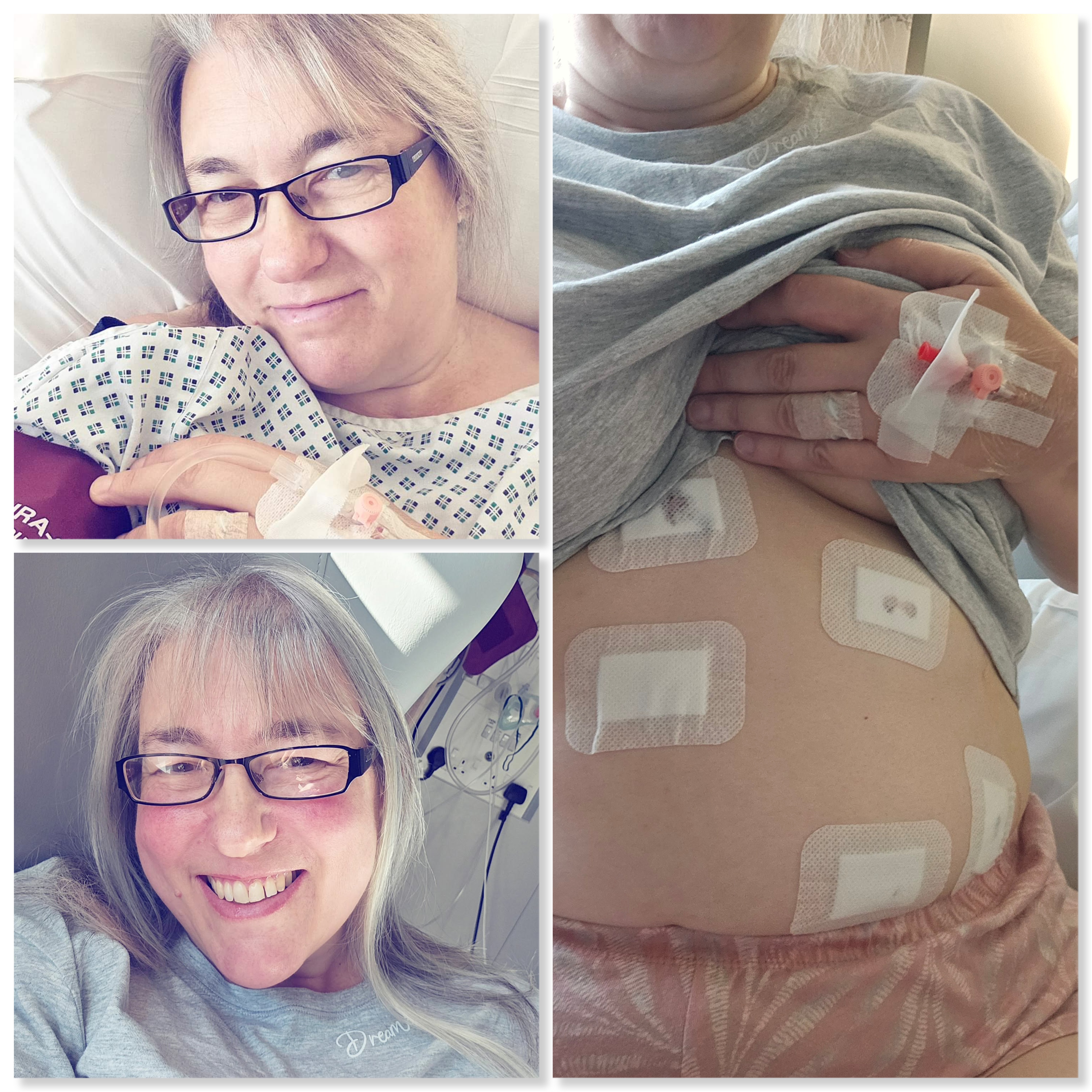
The professor, my surgeon, popped in to let me know everything had gone really well and the surgery, 360˚ Nissen wrap (fundoplication) and Hiatus Hernia repair, had gone great. I was given Ondansetron (Zofran) for nausea (and that anaesthetic always made me sick) to be sure I didn’t vomit, and morphine then paracetamol for pain. I had a bad headache and felt really bloated.
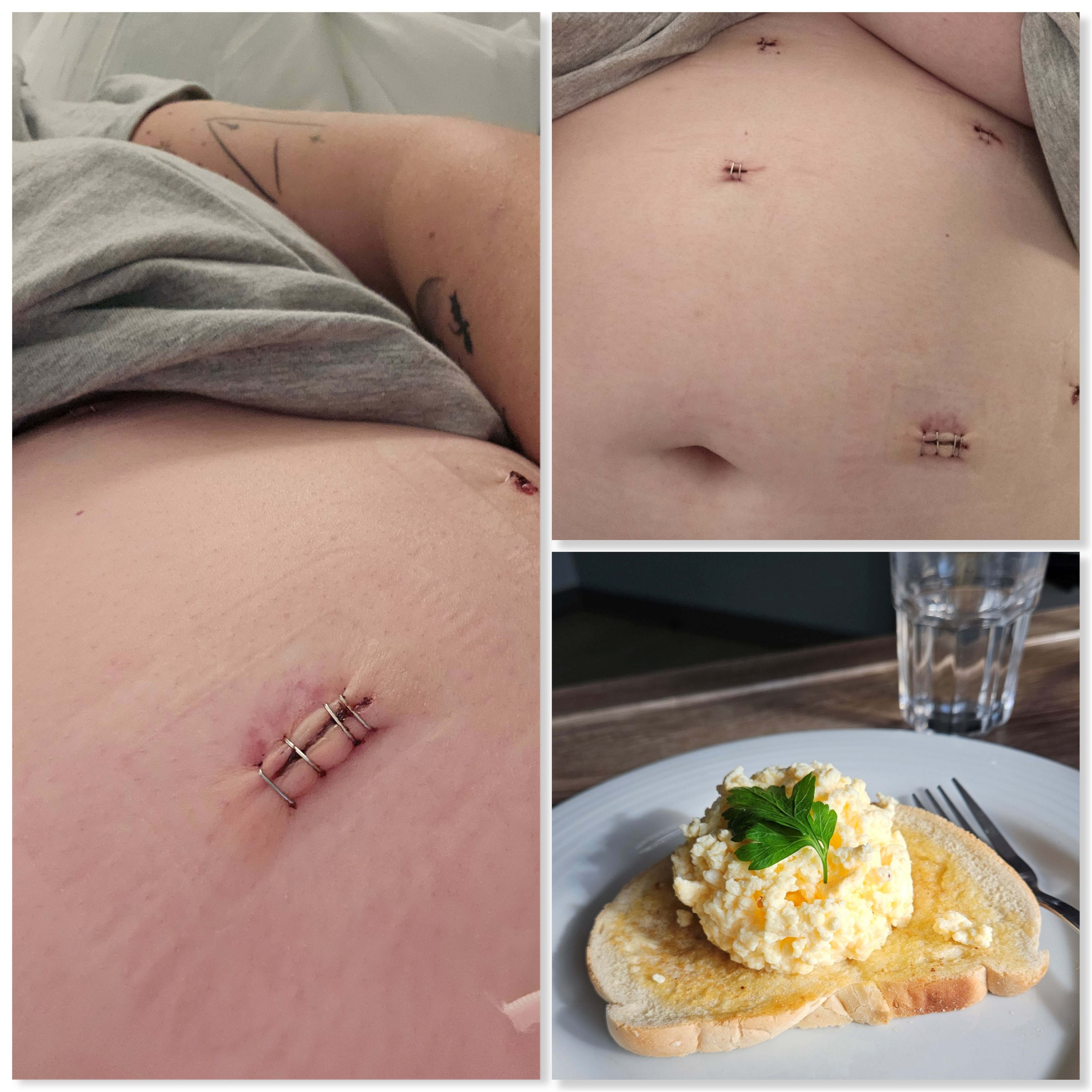
I dozed until 5pm, then had more soup before watching TV all evening and went to bed when I wanted. Routine observations overnight and I awoke refreshed and with scrambled eggs for breakfast – it felt like a hotel! When my nurse checked my incisions, I noticed they’d been stapled, and I took photos, the staples fascinated me! Five incisions: two below my breastbone and above my belly button, one to the left just beneath my breast, and two to the left of my belly button.
I was released to go home early afternoon. It was interesting to compare the private and NHS experiences I’d had with surgery. The staff, nurses, surgeons etc were on par with both, brilliant, kind, caring, and efficient, but the difference was in numbers; cost of treatment, probably wages for staff, and the pressure of numbers of patients to the ratio of staff. NHS staff have to cope with vastly more patients, so are under much more pressure.
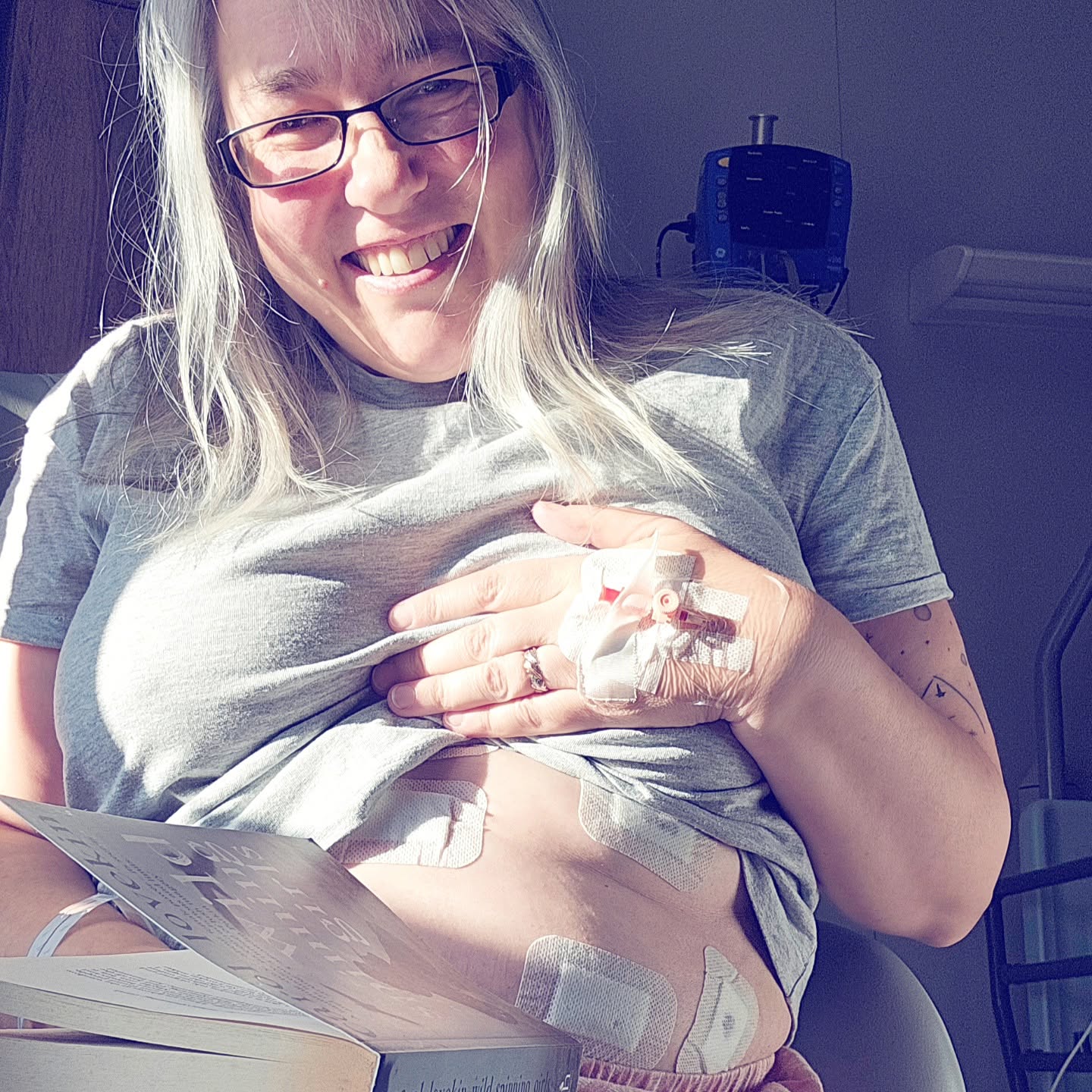
The following day I noticed that my reflux was gone, but I was also barely eating and my diet was liquid and mashed foods only for two weeks. I continued to take Omeprazole to be sure there was less stomach acid so my stomach could heal, and I took Ondansetron while I still felt sick and bloated. Often Fundoplication surgery will result in an inability to vomit or burp, and, certainly, vomiting could wreck the delicate wrap around the top of the stomach. The second day home and exhaustion hit, and I felt shattered and very weak.
I napped, I ate protein yoghurts, watery soup, banana and soya milk milk-shakes, and juices. I could hardly drink anything, though, and had lost 10lbs by the weekend. The gas, which surgeons pump into your body so that they can reach and find the right organs inside you, usually ends up around your shoulder, leaving you with a lot of pain up there until it disperses.
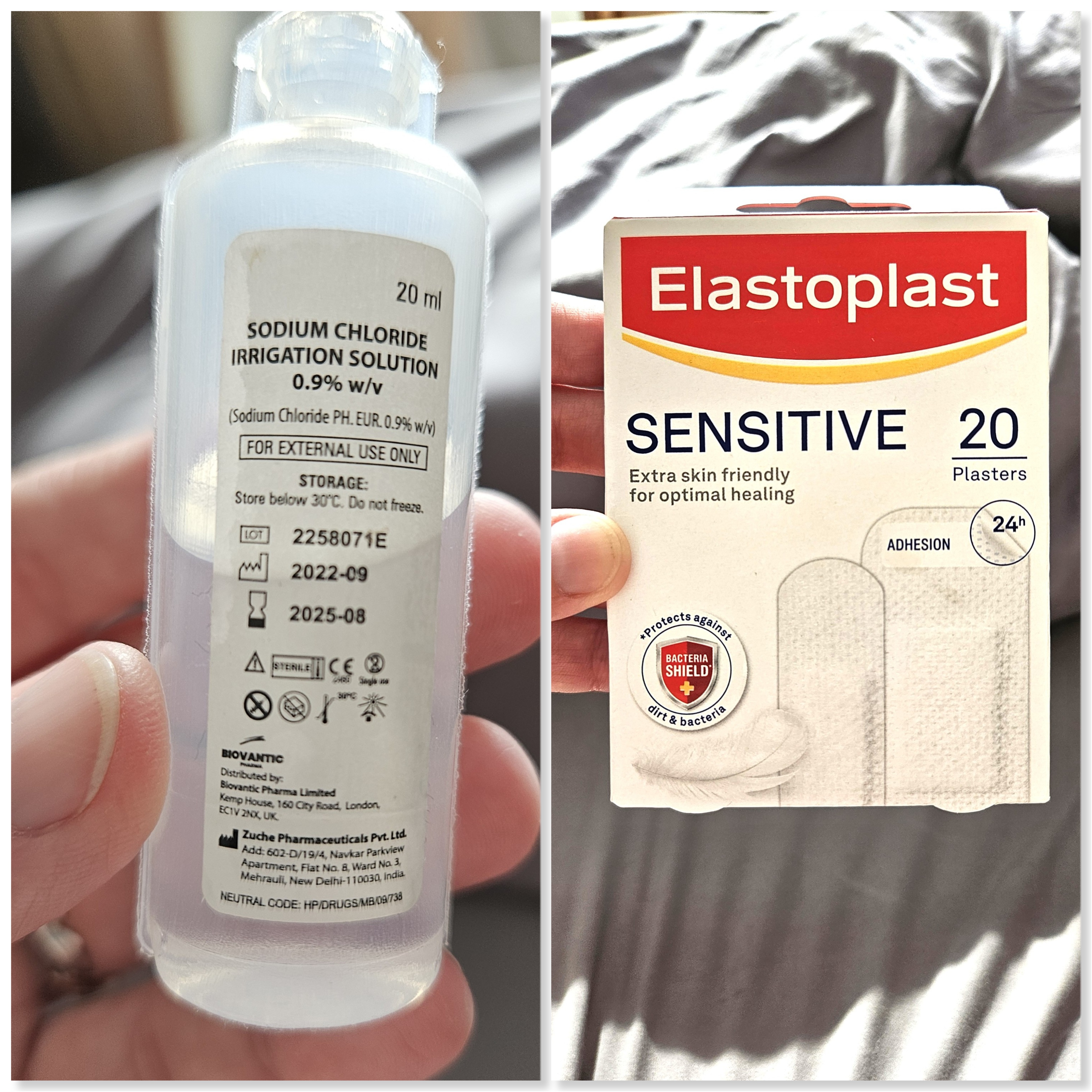
I also had severe occipital neuralgia, which drove me to tears more than any other pain I was in. Paracetamol and codeine didn’t touch it; we called 111 and I was prescribed quadruple strength Cocodamol from 8mg codeine to 30mg. The next day the pain switched from just stabbing to burning and tingling across the occipital nerve from the tip of my scalp to my chin, with a rash accompanying it. Back to the doctor and it turned out I had Shingles, again. I had no idea it could triggered by surgery when your immune system is busy trying to fix you elsewhere. I then had a reaction to the plasters covering my incisions, so had to get hydrocortisone and sensitive plasters, but no problems changing (and cleaning my incisions with Sodium Chloride) my dressings every day. I just changed the angle of the plasters to avoid the sore patches of skin each time.
After a week I felt a little stronger, and went out for hot chocolate with Vince. Not a great idea! I very quickly experienced Dumping Syndrome. This is where sugar goes straight through you, literally, making you run for a bathroom, at the same time as making you feel nausea, faint, shaky, and weak. Not fun!
Twelve days after surgery I had my staples taken out, easy and painless. I freaked out a bit back at home when changing the plasters, though. I had expected the wounds to all have healed over, and edge-to-edge skin closed. Nope. Three were, but two weren’t. These incisions were where tubes and surgical equipment had been used in keyhole surgery to operate, so the holes were different sizes. The biggest hole/incision closest to my belly button was gaping open, about 4mm deep, and 4mm open. The one beneath my breast was open, but not as much. It scared me a bit and I rushed to my nurse friend to ask her advice! Apparently, the deeper, bigger ones will knit together internally first, building up to an external scab when they close and flatten in the long run.
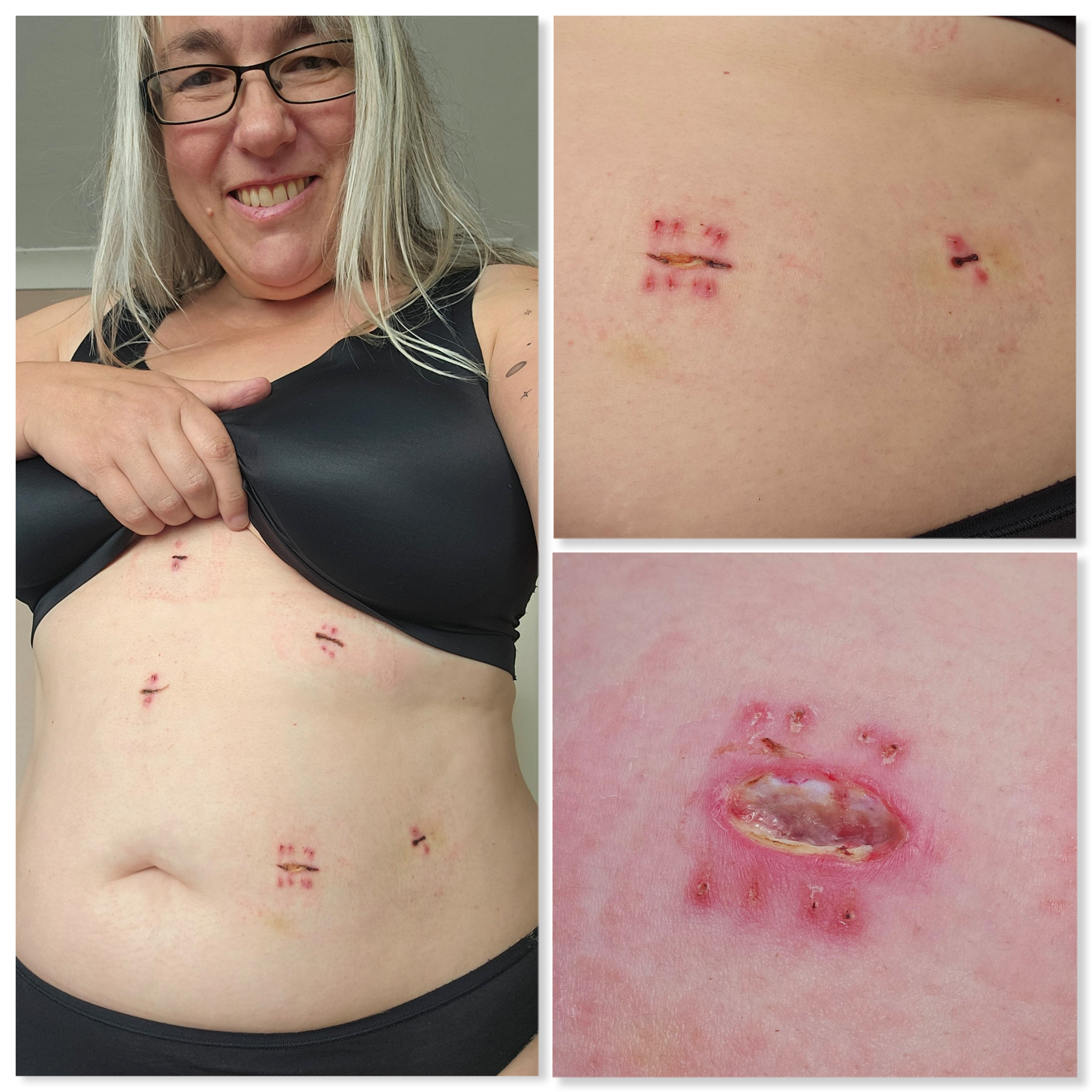
After a month, I’d lost a stone (14lbs) in weight, through very small meals: liquid and mashed. I introduced fish in parsley sauce, egg mayo, smoothies, and very mashed potato after a few weeks, but still had almost no appetite, nothing unusual there, lol. At 5 weeks I was eating most things, just not steaks or bread. I was walking regularly when we walked the dog, and kept things gentle, so I felt much stronger by this point.
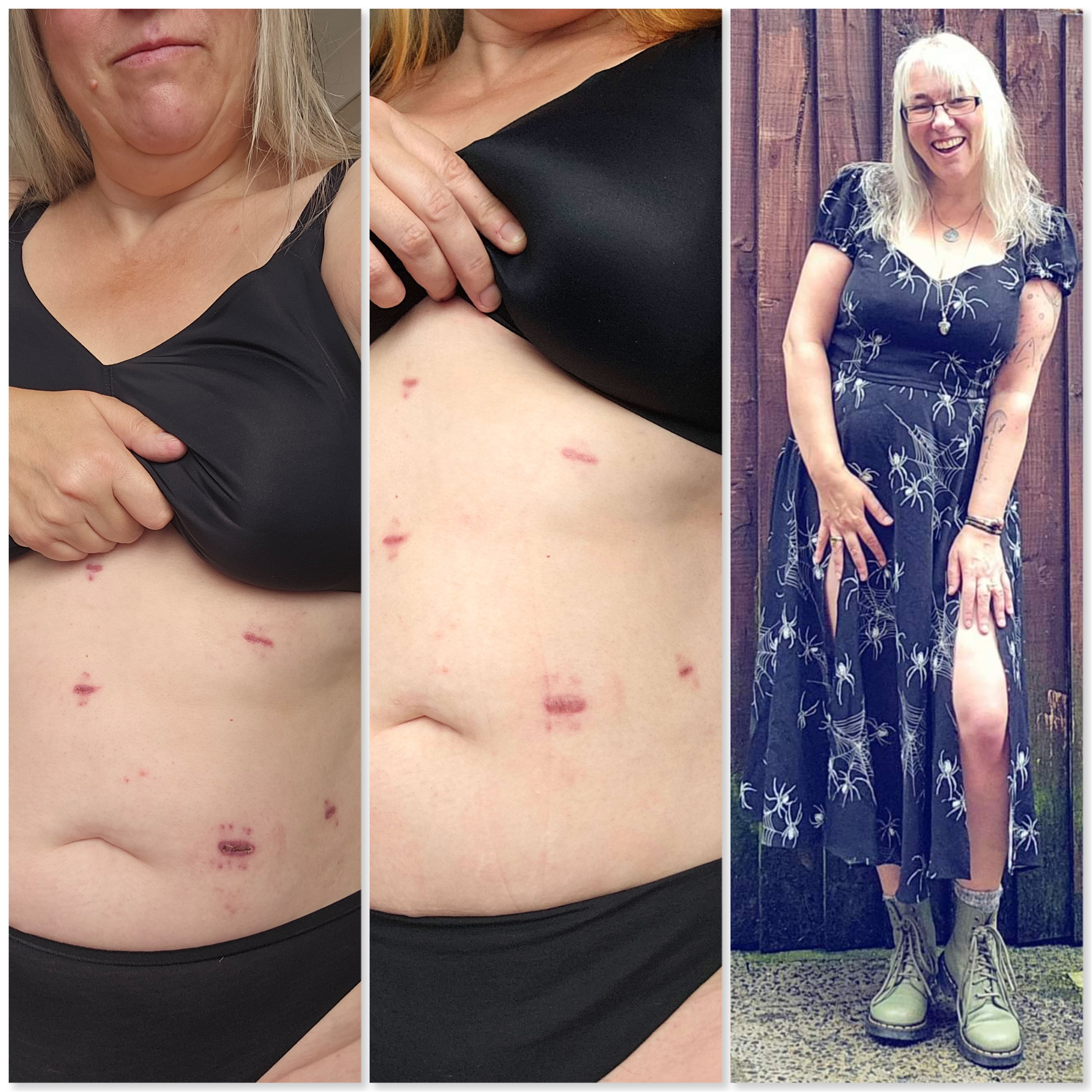
By six weeks I felt pretty much back to normal and it was wonderful to experience no more reflux. I could burp, but mainly from my throat, if the gas was in my stomach, it came out the other end, and I quickly had to accept that passing wind would be the new way of life. Farting jokes were fully acceptable, and it was necessary to have a sense of humour! The reason behind this is because the very top part of your stomach is called the fundus, and it’s where the stomach stores all the gas stomach creates during digestion. Normally that gas slowly disperses and disappears without any issues. However, Fundoplication surgery explains it in its name: the fundus is used to create the wrap that goes around the base of your oesophagus. The stomach which in my case was herniating into the hiatus (the opening in my diaphragm that lets the food pipe pass through to the stomach) is pushed back inside and the wrap reinforces the valve that opens your stomach. So, without a fundus, the fallout is farting, a lot!
Unfortunately, at six weeks I noticed a return of my cough. It wasn’t bad, and nowhere near the horrific coughing fits of the past. My first fear was a failure of my wrap, of the surgery, but I had no reflux. I went back on Omeprazole for a couple of months, but that made no difference to my cough at all, so I did some of my own reflux and stomach acid research.
I read that pepsin, a stomach acid, can migrate out of a stomach and into the oesophagus, and was known to also be a cause for silent reflux and/or a reflux cough. Eating acidic food can activate pepsin in the throat, burning it and perhaps causing a cough. I spent a while cutting acidic food back out of my diet. I also bought an alkaline water filter, to reduce the acidity of the water I drink.
This actually made no difference to my cough, and neither did reintroducing acidic food. So, I went back to my GP, and we concluded that my cough (thankfully much better than before surgery, but still regular) is not respiratory, allergies, post-nasal drip, or reflux, so we moved into more diverse reasons. I’d read about the vagus nerve causing a neuropathic and hypersensitive nerve cough. The vagus nerve runs right behind the lining of the throat behind the tonsils.
This cough is triggered by irritants or sensations: perfume, the cold, movement of the neck, talking, laughing, and smells. The neuropathic cough can cause persistent cough, breathing issues during coughing fits, vomiting, stress incontinence, and more. The description fitted my cough perfectly. It’s a dry cough at the very top of my throat, a sudden tickle, or dry patch causes a coughing fit for what seems like no reason. Mine is often caused by smells, body movement, talking, sudden change in air temperature, cessation of exercise, and other small things.
There have been studies on the vagus nerve showing damage caused by several things: upper respiratory infections, which I’ve had lots of throughout my teens and twenties (when I was diagnosed with ME, Myalgic Encephalomyelitis), or nerve sensitivity, or larynx hypersensitivity, or neuralgia, or shingles etc. I fit a lot of these causes. So, I am now trying a new approach, to try and retrain the vagus nerve if it’s been damaged and caused the cough.
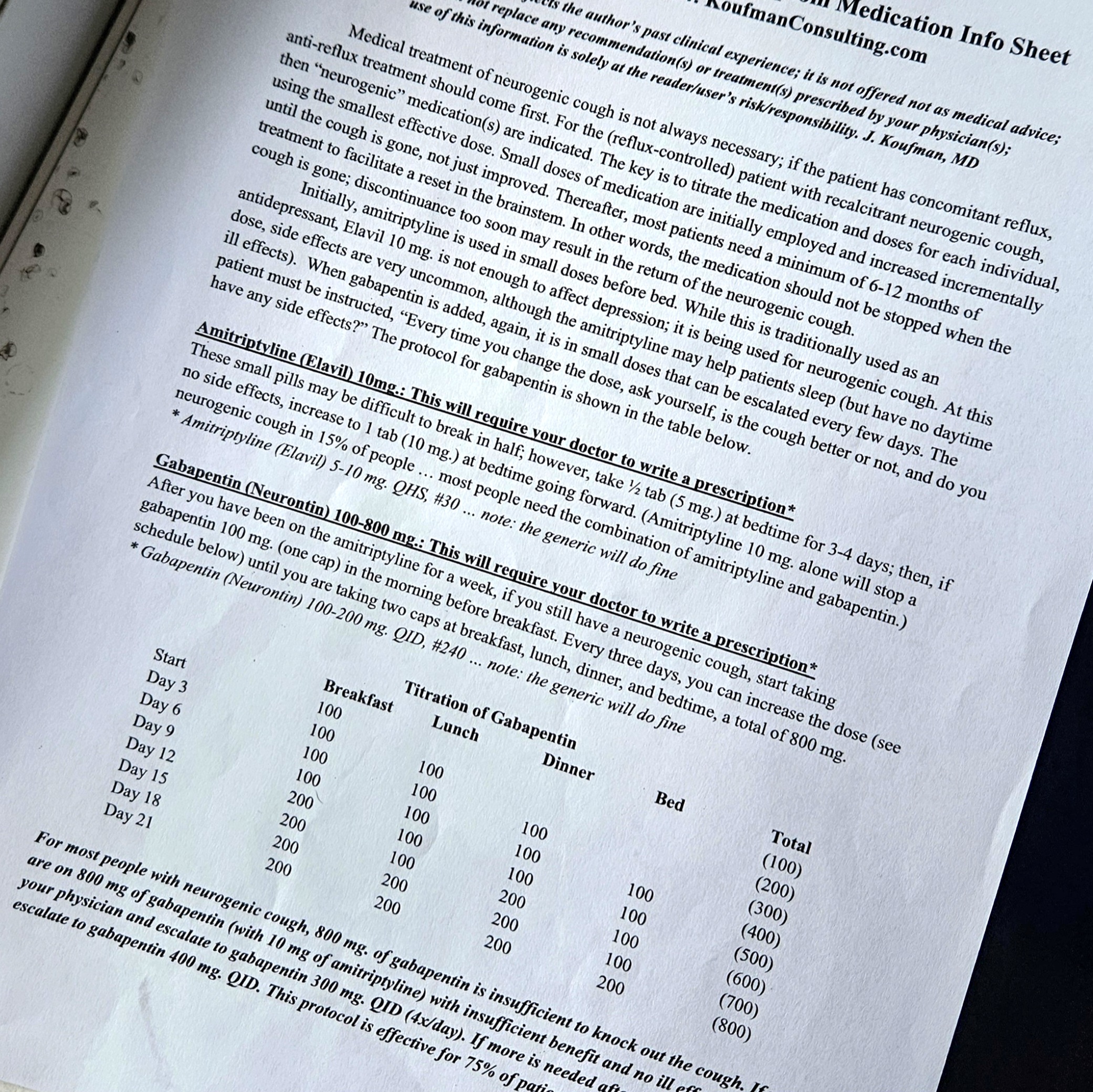
I tried taking low dose Amitriptyline to see if that helped, but it didn’t on its own, so then we added Gabapentin. The purpose of taking the Amitriptyline with the Gabapentin is that the low dose Amitriptyline is supposed to help the Gabapentin work better. Gabapentin is supposed to help calm hypersensitive nerves. I began with 300mg each day (100mg three times a day), then 500mg a day three months later, six months later up to 900mg a day. Another six months and up to 1,200mg a day. The idea is that a consistent dose for up to a year could retrain the nerve and eliminate the cough.
A year-and-a-half later and my surgical scars were healing well; they’ll continue to fade with time. I’d kept the weight I lost off. I wasn’t as hungry as I had been, maybe because my stomach was smaller, and still no reflux.
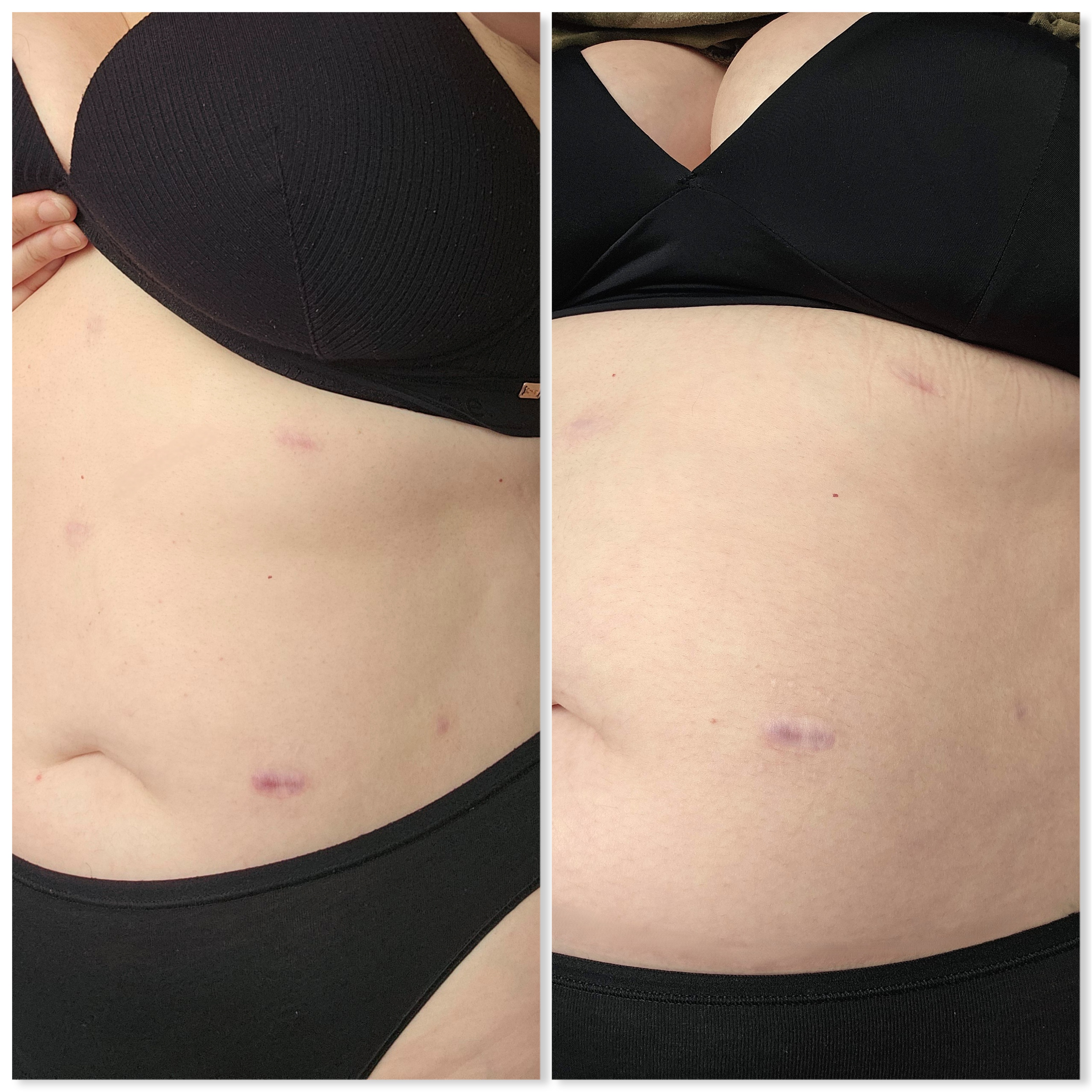
The cough is an ongoing thing, and though I still cough, there are no major coughing fits – I sometimes have coughing fits that lead into a sneeze, like from a tickly throat – but my coughing is minimal compared to what it was. If it isn’t successful, then I’ll get referred to neurology to see if there’s anything else they can try.
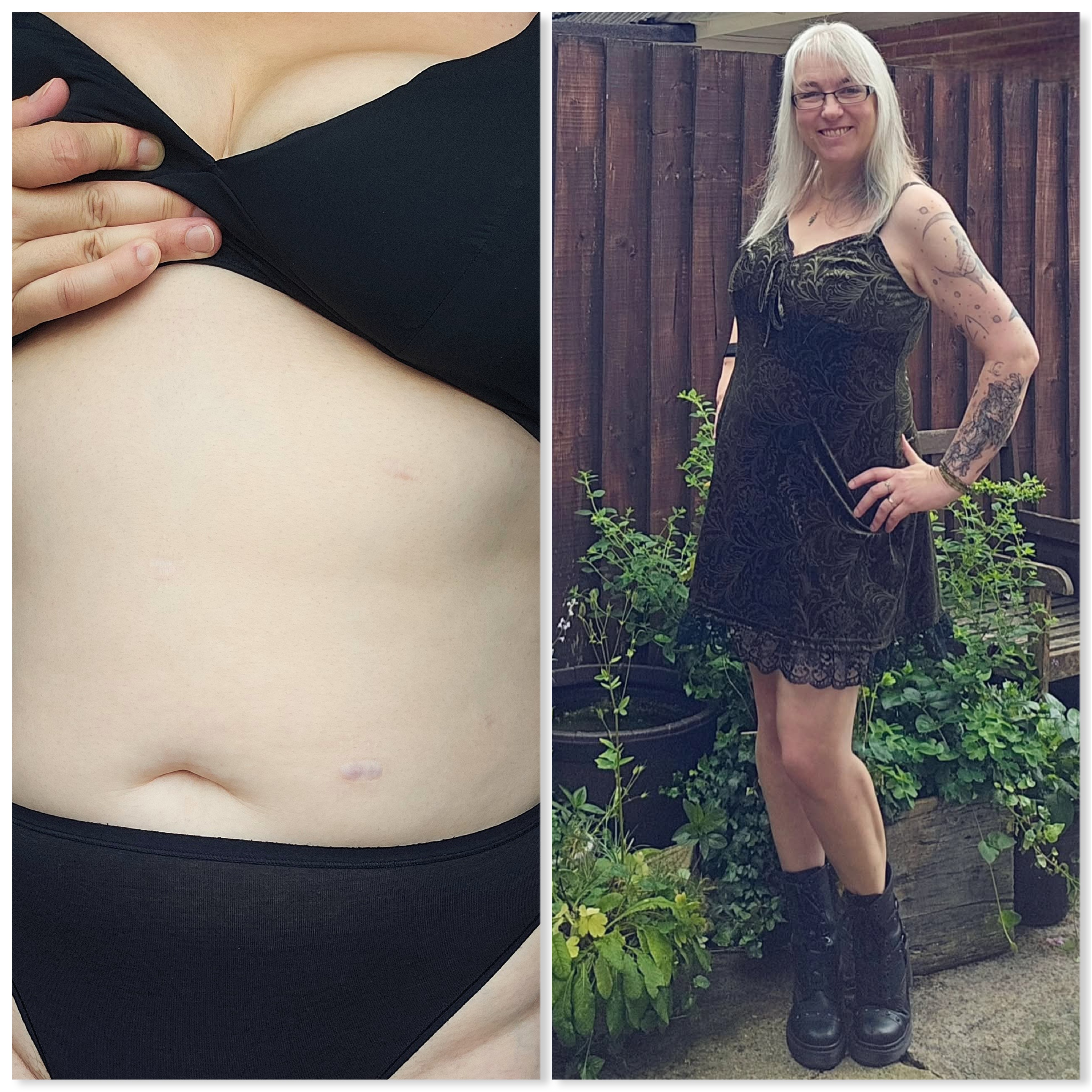
My Fundoplication reflux surgery seems to be a complete success two years later, with no reflux and the ability to eat almost anything I want to. Even though the surgery was taken in a bid to eradicate my cough, it has eliminated my reflux, which was definitely making my cough a lot worse. I am fully aware that the wrap can loosen with time, but I am hoping it stays operational for a lot longer, and I am so much happier having had it.