Category Archives: Nature

Lyme Regis, Fossils, Ammonites, and Fun!

‘Mary Anning [is] probably the most important unsung (or inadequately sung)
collecting force in the history of paleontology’

Stephen Jay Gould (palaeontologist and evolutionary biologist)

I’ve wanted to go to Lyme Regis for a while and back in April we did. The little town of Lyme Regis, part of the Jurassic Coast in Dorset, is famous for its fossils and for being the home of Mary Anning, one of the most significant fossil hunters in history.

Mary Anning, with her brother, discovered the first Ichthyosaurus skeleton when she was only 11. Then in 1823 she found the complete skeleton of a Plesiosaurus. She unearthed many fossils and sold them, generally without receiving credit for her finds in a male dominated geological community.

Lyme Regis The Royal Lion Hotel, Mary Anning Statue, Museum Lyme Regis Photo © Lisa Shambrook

I’ve been following fossil hunter lymeregisfossils on Instagram and been really inspired, so I really wanted to go and hunt for my own treasures! After some wet and windy months, off we went and arrived to glorious hot sunshine for the whole weekend. We checked into The Royal Lion hotel and walked down to the beach.

One of the things you have to remember about beaches with fossils is that they are constantly eroded as the tides move in and out every day. Fossil hunters are welcomed, because as fossils are revealed on the beaches, if they’re not collected they will be lost forever to the sea.

We walked west along the promenade towards the harbour and down to Monmouth beach. It’s a fair walk across pebbles, rocks, and boulders to find the Ammonite Pavement. It erodes more each year, but the pavement is there on a limestone ledge at low tide. Ammonite fossils embedded into the limestone slab from the Late Triassic period. Seeing them and all the large ammonite fossils preserved and imprinted into rocks and boulders was our first moment of Jurassic wonder. The fossils and the swathe of honeycomb tube worm reef were quite a sight to behold!
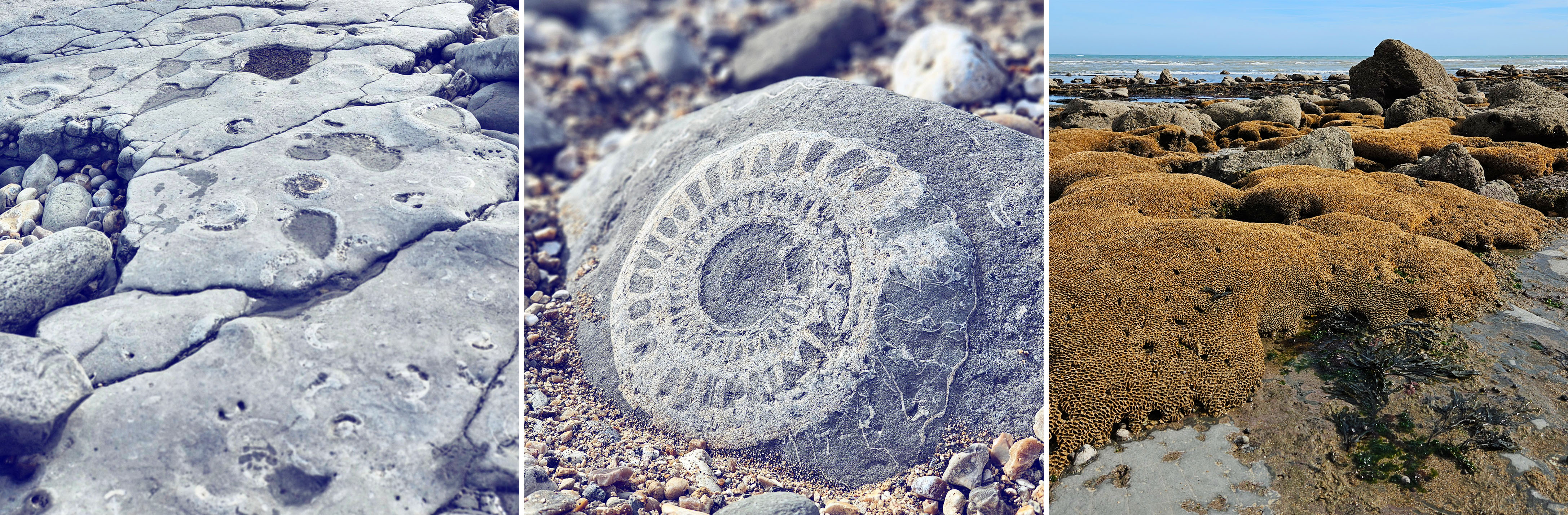
Ammonite Pavement, Ammonite Rock Fossil, Honeycomb Tube Worms Monmouth Beach © Lisa Shambrook

We booked a local fossil hunting walk with Lyme Regis Museum. We felt the talks beforehand, explaining the history and everything we needed to know about fossil hunting was rather long, but as an autistic person I’d done major research before we went, so I was just raring to go! 

Pavement outside Lyme Regis Museum, Ammonite Fossil on Ammonite Pavement, Lisa and Vince
© Lisa Shambrook

Black Ven beach is to the east of the town and its huge dark cliffs stretch towards Charmouth. The cliffs are limestone and dark shale and reach 130m. Fossils are embedded deep within the cliffs and as they wear away the fossils are released onto the beach. There are regular mudslides and you should keep well away from the cliffs to avoid any sudden movement in them. In the Victorian era the cliffs were used as rubbish dumps and as they’ve eroded the rubbish ends up on the beach too.

We walked from the museum to Black Ven and down the steps to the beach. You aren’t likely to be alone on the beach, you’ll be sharing it with many fossil hunters and the overriding sound, besides waves, is the chink of hammers splitting open large pebbles in the hope of finding an ammonite inside!

Black Ven Beach and Cliffs, Vince, and Victorian finds on the beach © Lisa Shambrook

Most people will find a few fossils, but there are plenty of tips for finding them. It’s good to know what you’re looking for.

The easiest ammonite fossils to find are beef shale fossils. The stones are grey and thick. Beef shale is the base rock the cliffs are made from and with mudslides and rock falls they are the most obvious fossils. You can find ammonite impressions and fossils in small pieces of beef shale across the beach.
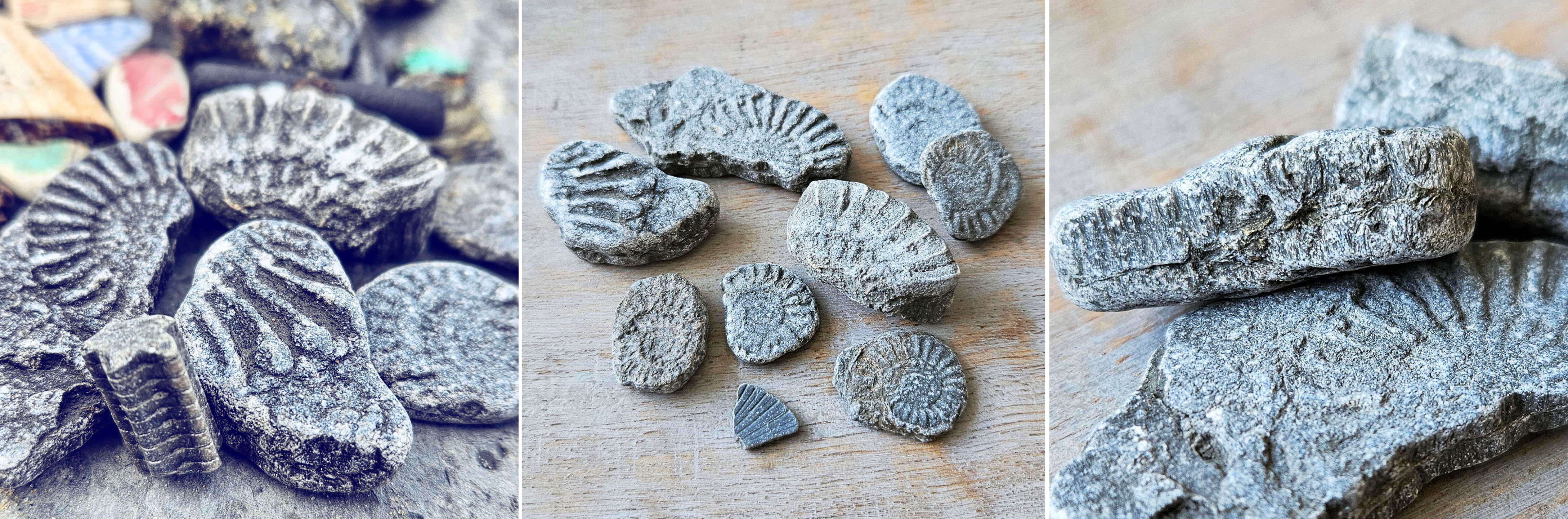
Beef Shale Ammonite Fossils © Lisa Shambrook

Belemnites are the internal part of an extinct squid-like creature. They are bullet-shaped black or grey stones that shouldn’t be too difficult to find. Some are the pointed domed end of the stone, and some look like narrow sticks.

Belemnite Fossils © Lisa Shambrook

Calcite ammonites and ammonite fossils can be found within oval rocks, but most will need to be hammered to chip them open to find them. A round or oval shaped pebble may have an edge that looks a little like a spine, which would tell you there’s likely to be an ammonite inside.

Calcite Ammonite and Rock Fossils © Lisa Shambrook

Dinosaur or Plesiosaurus vertebrae can be found as black pebble-like discs, but more difficult to identify if you’re not sure of them.
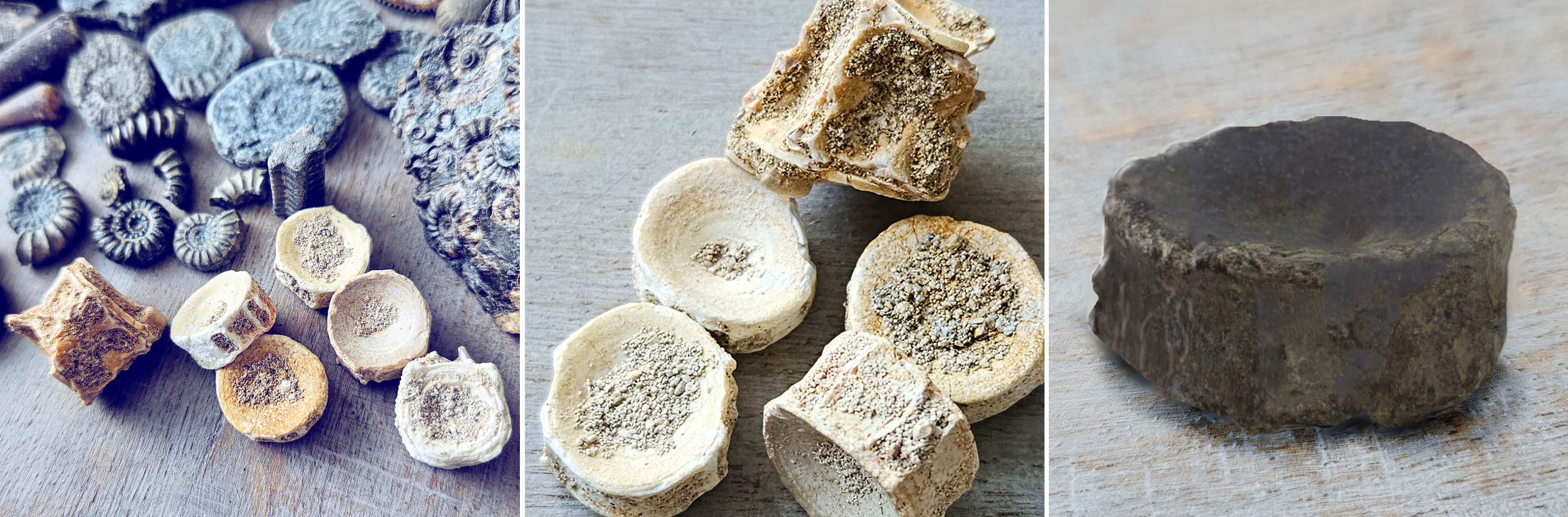
Dinosaur Vertebrae Fossils © Lisa Shambrook

Pyritised Ammonites are a great find. These are ammonite fossils where their original organic material was slowly replaced by iron pyrite with fossilisation, rather than with calcite or quartz. Beautiful little bronze coloured pyrite ammonites. If you come across pyrite on the beach, small pieces of bronze coloured material, or glittered shale, you could be close to a pyritised ammonite. If you’re lucky you could find an intact ammonite, or you could find part of one. Pretty cool either way!

Pyritised Ammonites and Pyrite © Lisa Shambrook

Crinoid stems or stars are the fossils of an extinct sea lily, a sort of biological anemone. It had long stems with fern-like fronds which waved around in the ocean. Some stones are imprinted with the stem and frond fossils, and you can find crinoid stems. The stems are made from segments of star shaped pieces, which can be found as a stack or as single tiny stars.
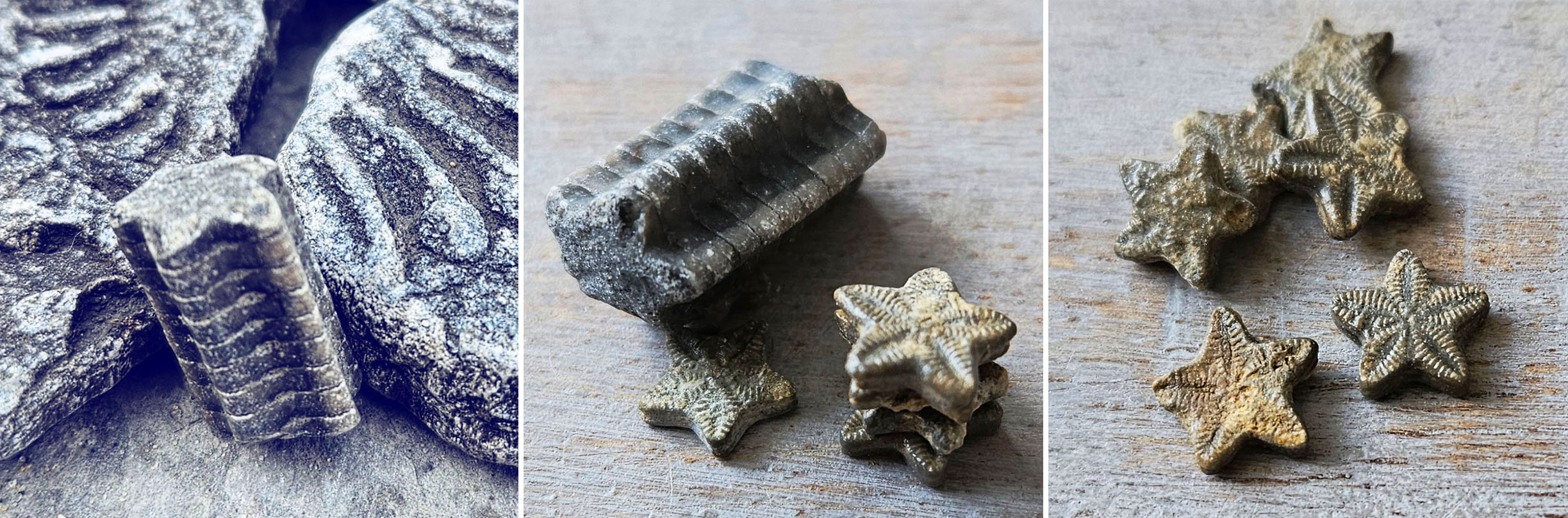
Crinoid Stem and Stars © Lisa Shambrook

There are plenty more treasure to find, depending on what you call a treasure! You remember that I said the Victorians dumped their rubbish on the cliffs… the beach is strewn with their remnants. Beware that amid the pebbles, sand, and rocks, glass is all across the beach. Most of it is sea washed and has become sea glass, but some sharp pieces still remain. There are huge pieces of metal, piping, springs, broken cogs, equipment, broken china, tiles, bottle tops, Verdigris copper fragments, marbles, toys, and even bullets from the wars to be found or searched through.

Metal, China, Sea Glass © Lisa Shambrook

I found a tiny white china doll, which I later discovered was a Frozen Charlotte, a cheap doll made in the Victorian times. The tiny ones like I found were often placed in puddings or cakes to be found when eaten, a bit like the silver sixpence in a Christmas pudding!

That first afternoon on the beach we spent a lot of time sifting through tiny stones and pebbles with our fingers, and with a piece of piping I’d found. We found beef shale fossils quite easily, and a few belemnites. I found lovely pieces of broken crockery, sea glass, a tiny cog, my frozen charlotte, and a marble. There were lots of pyrite, from the weird bubbly organic pieces which looked like bubbly grey-gold stones, to glittery pyrite. I searched frantically for pyritised ammonites, which was what I wanted to find the most, but I didn’t find any. I really wanted a pyritised ammonite and a crinoid, but as everyone began to leave, I’d not found those.

First Day Fossil Hunting, Frozen Charlotte, Fossilised Gas Bubbles © Lisa Shambrook

I was disappointed, but I also knew that finding anything was a gift, pot-luck really. It was getting late and the tide was coming in when I asked the ocean for one little fossil… I hugged Vince and then looked down and there I saw a crinoid stack. Nine tiny star-shaped segments just sitting against a rock beside us. I was ridiculously happy!

The next day we were due to drive home, but we stayed a little longer and went back to Black Ven. We had to wait while the tide went out. The best time to search for fossils is said to be an hour before and after low tide, when the beach has been churned up with the tide and released new fossils. We were a bit earlier, knowing we had to go home. So, we waited for the tide to move away from the steps to get onto the beach, and then searched. My second haul brought me more shale ammonite fossils, the butt end of a bullet, more china and sea glass, a few more belemnites, tiny fossilised gas bubbles, which look like teeny brown mushrooms, and I finally found my pyritised ammonites! Broken pieces and a couple of full ones.

Second Day Fossil Hunting, Lisa, and Bullet butt © Lisa Shambrook

I did buy a few prepared pyritised ammonites, a calcite ammonite, half ammonite pebbles, an ammonite fossilised piece of rock, cream-coloured dinosaur vertebrae, and a few crinoid stars from the local fossil shops. I wanted to make a crystal grid back home with my fossils!
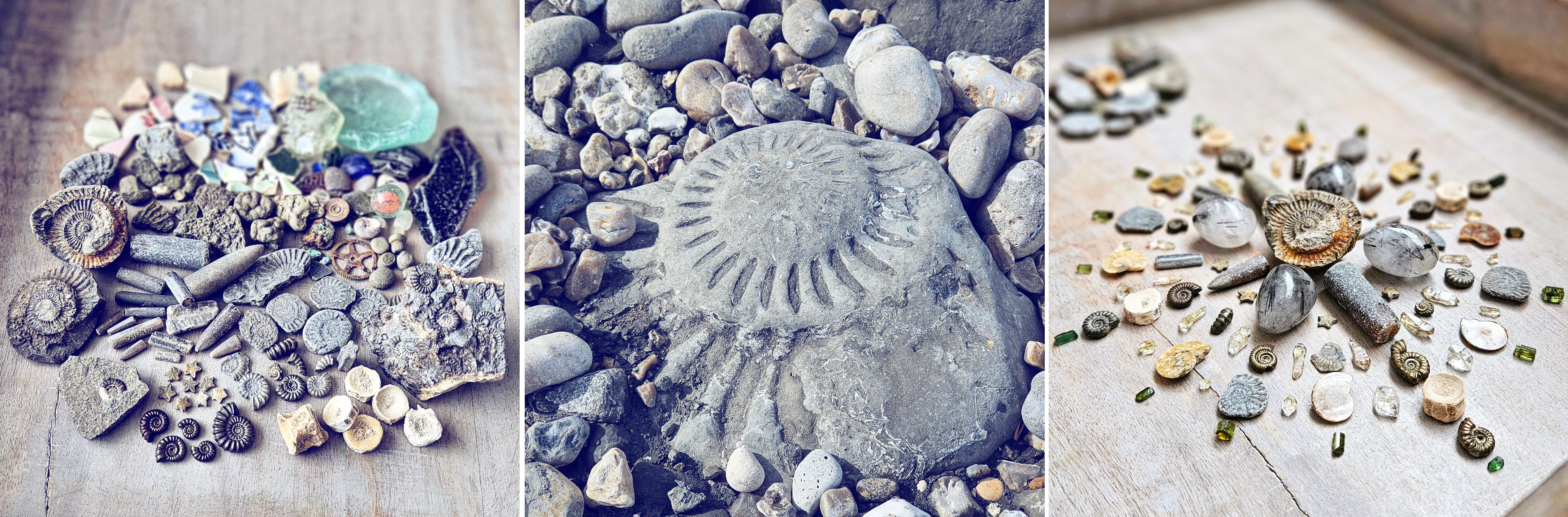
Final Fossil Hunting and Buying Haul, Ammonite Rock Fossil on Monmouth Beach, Crystal Grid made with my fossils for Grounding and a Deep Connection to the Past © Lisa Shambrook

To top it off, the hotel was lovely, and Vince and I had what was probably the most expensive and delicious dinner out we’d ever had! Tom’s in Lyme Regis, we felt very posh! Melt-in-the-mouth Dartmoor steak, potatoes Anna, cavolo nero kale, wild mushrooms, and peppercorn sauce, and then chocolate mousse, honeycomb, and salted caramel. It was stunning, and I really wanted to take a photo of it, but it felt too upmarket to do so, lol! Beautiful drinks too, Hendricks, lemonade, and sliced cucumber, which I loved, and Lyme Regis Gold Cap lager, which Vince enjoyed. We came away just a little drunk and very satisfied!

It was the best weekend in a long time, and we can’t wait to go back.

Lyme Regis caught both our imagination and our hearts.
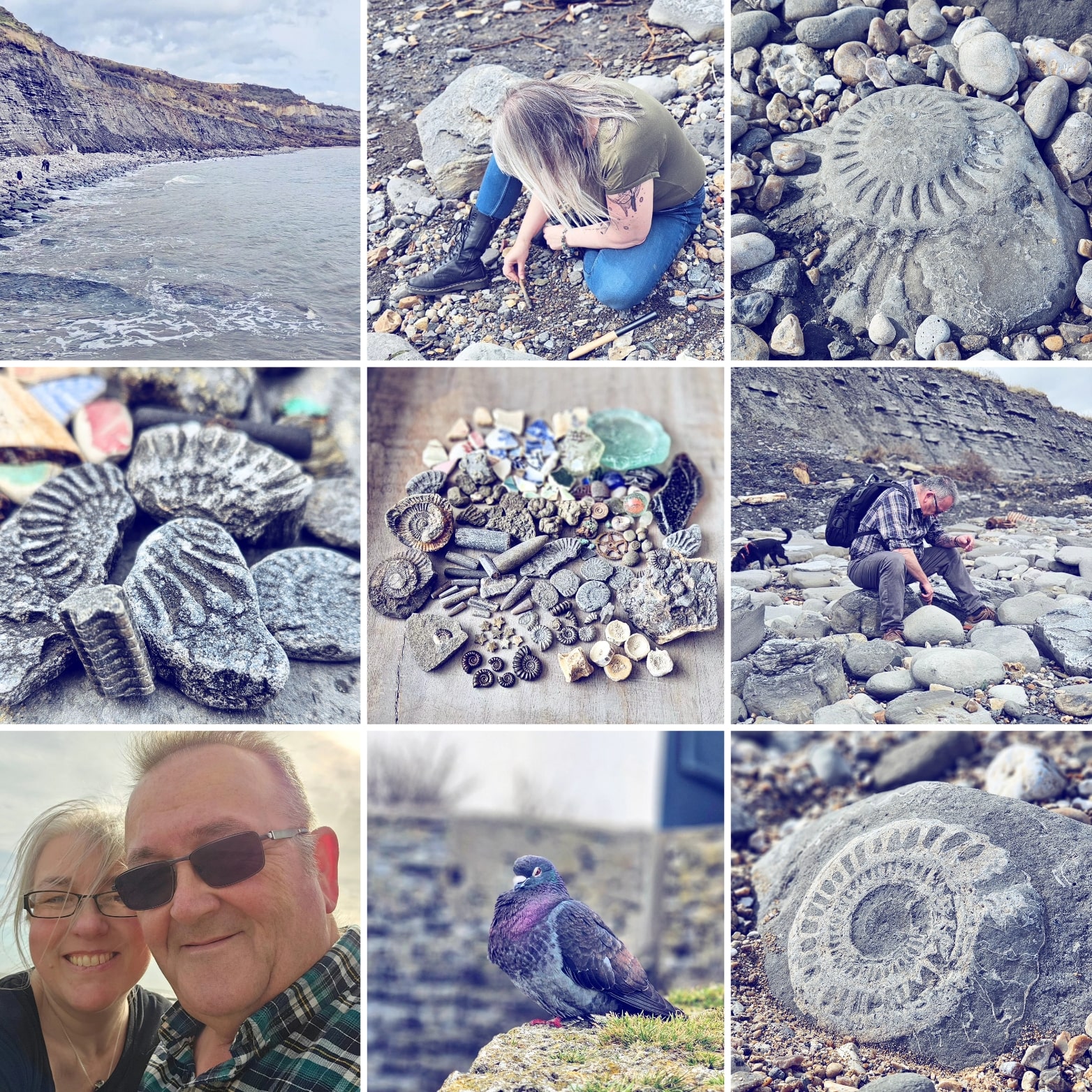
Our trip to Lyme Regis to fossil hunt © Lisa Shambrook

Climate Change – COP26 – Changing the Narrative, the Blame, and our Actions

What will it take to save the planet?
Change.
Change in the narrative, change in the blame, and change in our actions.

I’ve watched the News over the last few weeks, reporting on COP26 (Conference of the Parties for those countries who signed up to the 1994 treaty UNFCCC – United Nations Framework Convention on Climate Change) and their discussion on Climate Change. I’ve heard them say they’ll stop cutting down the rainforest in a decade, they’ll introduce some more electric cars, oh, yes, they’ll try to stop cows from farting, ie, reduce methane. I also heard they might try and get rid of coal, but I’m pretty sure we’re opening a new coal field in Cumbria soon, so that’ll go well. We’re still waiting to see if our Leaders can come up with big agreements and remain accountable, but forgive us our scepticism. Most steps our governments make are small, and it’s almost always the public who are expected to change rather than the government or industry.

It’s the big things that matter. We’re already doing the small things. We can all do our bit – walk more, buy local, put out blue bags, and recycle. We hope our local council is actually recycling it. It’s been shocking to discover many Local Authorities pack up their recycled plastic, and send it to third world countries for processing, except that those countries lack the infrastructure to cope, and it just creates massive, problematic, mountains of waste in another part of the world.

Moss © Lisa Shambrook

Local Authorities, governments, and industry need to take big steps and take accountability. Money needs to be taken out of fossil fuels and plastic and put into solar, water, and wind. I mean, fossil fuels are literally running out, and we have more sun, ocean, and wind on our literal doorstep. But the general public can’t do this. It has to come from government and big business. Industry and Law has to change. We can recycle our plastic drinks bottle, but maybe the drinks company should be producing a more ecological bottle or packaging. We can try to buy food without plastic, but if our supermarkets and their suppliers don’t stop over using it, we have much less choice. We can only work with what they give us.

We, and governments etc, need to listen to activists and scientists. Activists will keep Climate Change on our radar, they will keep us aware, and scientists will move us forward with statistics, information, time scales, and directions on what we need to do to protect the planet. The older generation seems to listen to Sir David Attenborough, and he is God tier – to be protected at all costs, but they don’t like being told what to do by the younger generation. Greta Thunberg, Patience Nabukala, Brianna Fruean, and others repeat the words of warning at COP26 for climate change, and are fully backed up by Attenborough. A NASA article explains that 97% of scientists agree on the validity of Climate Change. United Nations, NASA, many organisations, and our governments all utilise scientists and their predictions, and we need to listen to them.

Canary Wharf, London © Lisa Shambrook

It appears the older, richer, and more powerful people aren’t listening, or maybe they just don’t care. An Oxfam report noted that ‘The world’s richest “appear to have a free pass to pollute,”’ Their report found that the richest 1% will have a carbon footprint 30 times higher in 2030 than what is needed to meet the goal of limiting global warming to 1.5°C. According to the report the carbon footprint of the rich will always be much more than the poorest 50% who are on course to produce fewer emissions to align with the 1.5°C target. Think billionaires, millionaires, and those in the top 10% of global earning – anyone earning over $158K (£117K) – these are the people that need to change, to reinvest in ecological practices, to change the narrative, to save the planet.

The young, the rising generations, know what they’re talking about, and how dare anyone say they don’t. Back in the eighties when I was a teen Climate Change was taught to us. It was mainly about greenhouse gasses and the declining ozone layer, but we began to learn what we were doing to the planet and we began to want to change. We got rid of CFC’s and the ozone layer repaired itself. But it wasn’t just about CFC’s. And now, forty years later, we’re still fighting for change and the planet has declined even further.
Carnelian © Lisa Shambrook

The young today are taught from primary school. They know more about climate change, declining populations of animals, and about our earth from children’s books on the environment, than, it seems, our actual politicians do. They want to change. They want to save their planet. They are willing to do what it takes.

A friend of mine took her daughter, who must be a young teen, to the recent Glasgow COP26 protests, and I would put money on that young woman understanding more about the environment and climate change than our own Prime Minister.

Brechfa © Lisa Shambrook

I saw a meme the other day on Facebook, a meme that is oft repeated, but it makes me so angry.

It exonerated older generations, the Silent and Boomer generations, from taking the blame for plastic. It explained that they ‘courageously’ walked everywhere, recycled their glass pop and milk bottles, used cotton shopping bags, didn’t have plastic toys, or McDonald’s or Burger King. They had no polystyrene, wrapped their food in newspapers, and didn’t go on foreign holidays. It then went on to blame the younger generations, Millennial and Gen Z, for their culture of waste and called them ‘little shits’ for preaching to them about climate change.

It failed, in a huge way, to point out that if our children had been born back then they would have done the same – because plastic hadn’t been invented and wasn’t flooding the planet like it is now.

And guess who brought us plastic? It was the older generation, who fully embraced its convenience. We probably all would have done. But the fault doesn’t lie with a generation, not old or young, it lies with those who, once we knew of the dangers of plastic, continue to saturate the market, and the world, with it.

Brechfa Moss © Lisa Shambrook

Plastic has become part of our world, and if it was easy to get rid of it, we would. But while those in power, both in government and industry, continue to pump money into it, plastic will not die.

The irony being that plastic, point blank, will not die. It won’t degrade and will continue to pollute for hundreds or thousands of years.

Time © Lisa Shambrook

Plastic is a literal part of our world, and that is what needs to change. So, let’s listen intently to the young and the scientists who want to change the world, to save our planet, and let’s lobby parliament and industry to change. Vote for those who will take the money out of fossil fuels and plastic and put it into renewable resources. We’ve tried to change through recycling, switching to eco-friendly products, but it’s a world for the rich, and while they continue to flood the market with plastic, non-environmental products, and electric cars and heating pumps that are too expensive for most of us to buy, we can’t win. We have to vote, to be part of politics, to lobby for change before we run out of time.

We have to save the planet for those future generations
 – our children, our grandchildren –
and those that want to live in a thriving world, long after we’re gone.

Autumn – Season of Reflection and Gratitude

Autumn arrives in a blaze of glory.
It’s a time of reflection and gratitude,
a time to recharge and choose your direction for the rest of the year,
and to enjoy the bounty and abundance from Mother Earth.

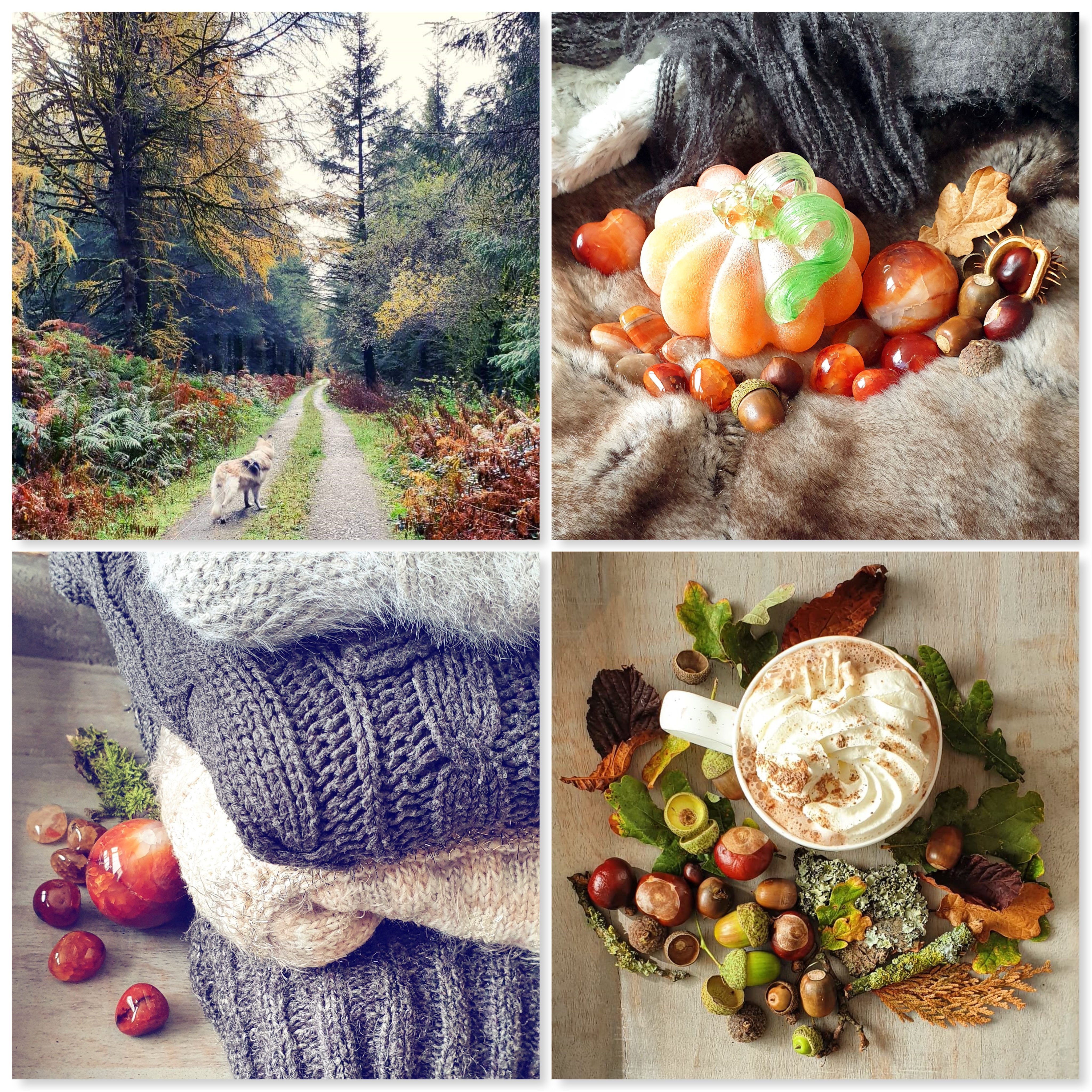
I love that moment when I step outside and the scent of autumn is in the air, when the leaves are turning, and I can pull out my favourite jumpers, slip on my boots, and find my hats and gloves again. I love my autumn gems and pumpkins, and it’s time for hot chocolate and autumn treasures.

Dog Walk, Carnelian and Fire Agate, Jumpers, Hot Chocolate © Lisa Shambrook

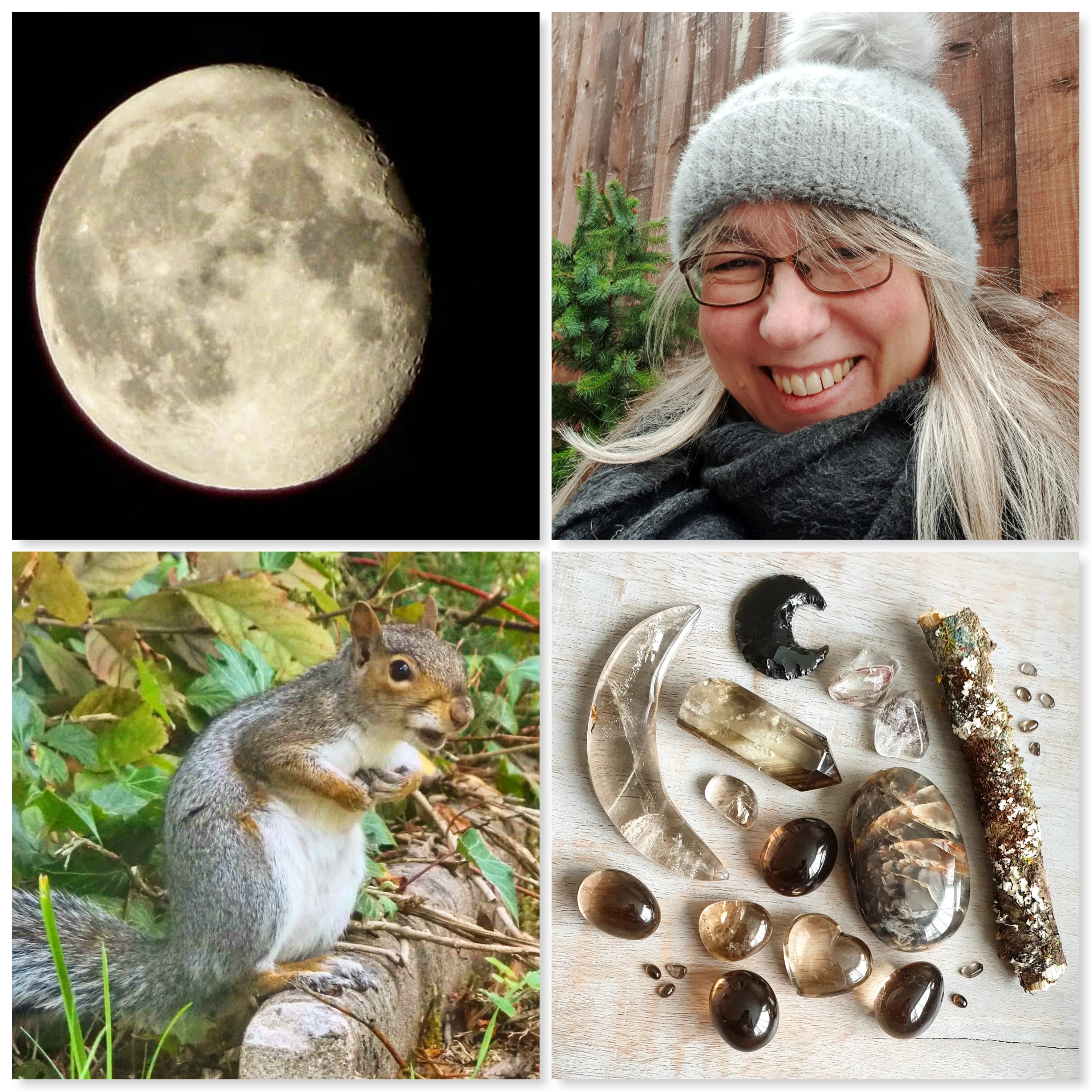
The moon fills the crisp night sky and the stars seem even brighter. I buy a new hat and watch the squirrels eating windfall apples in my garden. Autumn is a grounding time of year, and I feel my autumn stones, smoky quartz, black moonstone, lodolite quartz and the crystals that offer healing, protection and grounding.

Moon, Scarf and Hat, Squirrel, Smoky Quartz © Lisa Shambrook

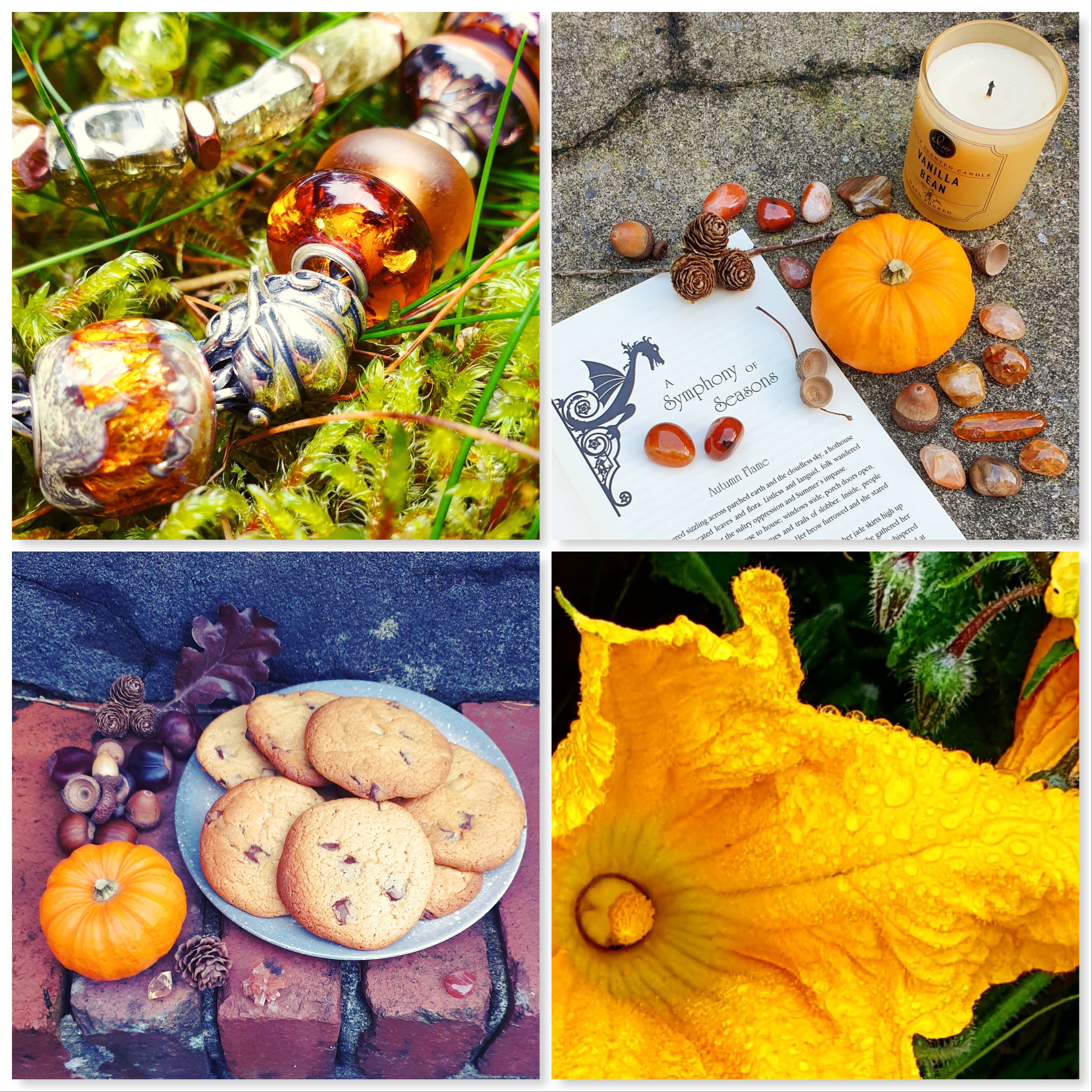
It’s a time to celebrate the rich colours: bronze, orange, gold, and brown, and the glorious harvest of fruits and veg. I bury my head in a good book when the weather gets too wet or cold and start baking again!

Pumpkin, Symphony, Cookies, Courgette Bloom © Lisa Shambrook

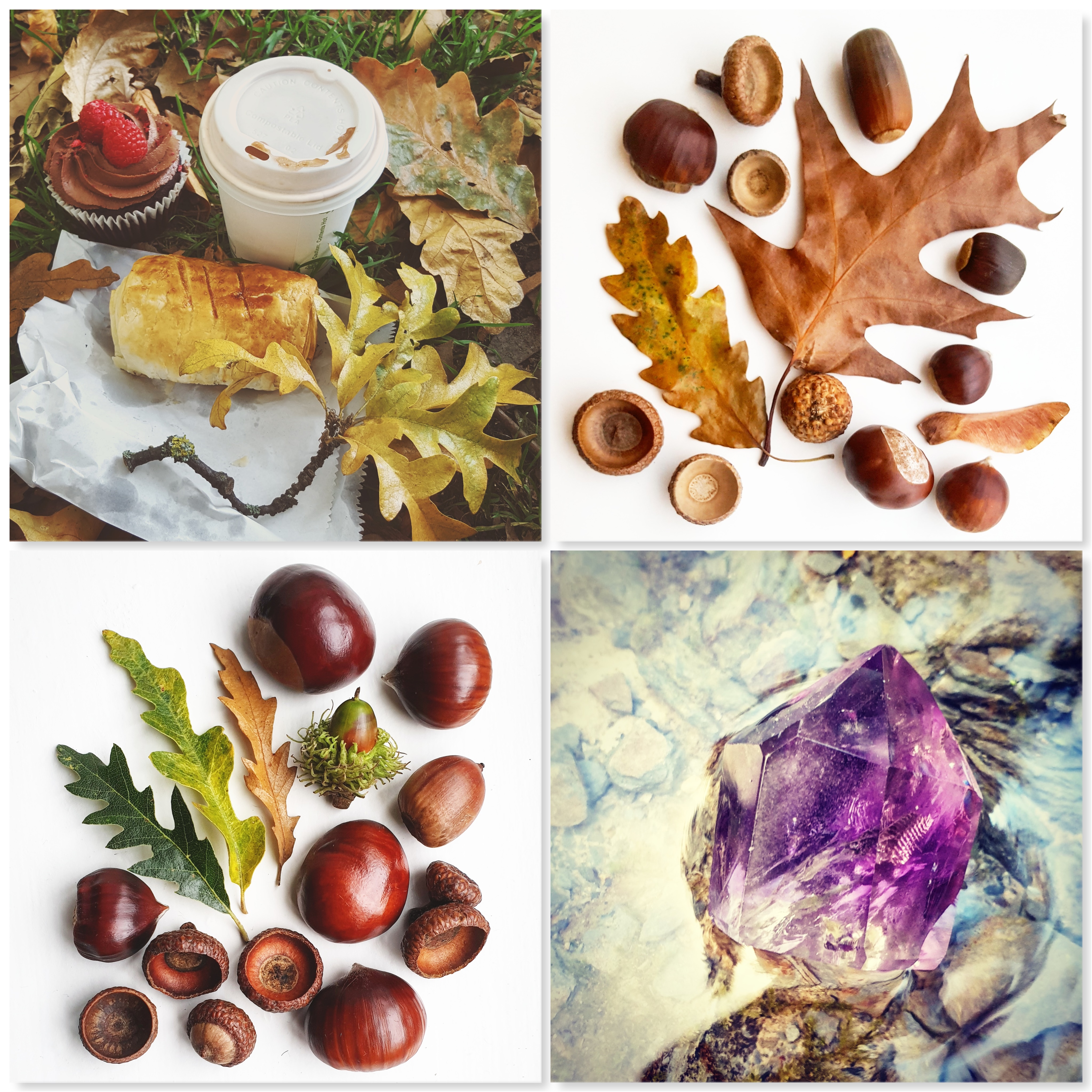
Light that candle, so many fragrances for autumn: chocolate, caramelised apple, sweet pumpkin, vanilla bean, and berries. Apples and plums, not just for candle scents! Carnelian offers confidence and courage and fits the autumn colour scheme with its burning orange glow. And, lastly, you’ll find me searching the hedgerows, parks, and woodlands for its treasures, bringing home pockets filled with conkers, acorns, leaves, and chestnuts.

Candle, Carnelian, Apples, Conkers and Acorns © Lisa Shambrook

Autumn is me!
What are your favourite Autumn treasures?

Nature and Mental Health – Soak it in

It was interesting to see that the focus for Mental Health Awareness Week, 10th – 16th May, this year is Nature. Now, I’m not going to put it out there that nature fixes our mental health. It doesn’t. A good health service, access to mental health facilities and services, medication, diagnosis, experts, voting for parties that will increase mental health services and access to the assistance we need, and much more will help our mental health more, but nature does have its place in preserving our emotional and mental health.

There is a lot of scientific and medical evidence that shows that nature improves our mental health and wellbeing. Nature can offer a calming and soothing effect that lowers our stress levels and anxieties. Being outside and bathing in light, sunlight, or just daylight, can improve our production of serotonin and Vitamin D. Exercise increases endorphins, and just walking in woodland, alongside birdsong, or along a beach, listening to waves crashing, can significantly help your general mental health.

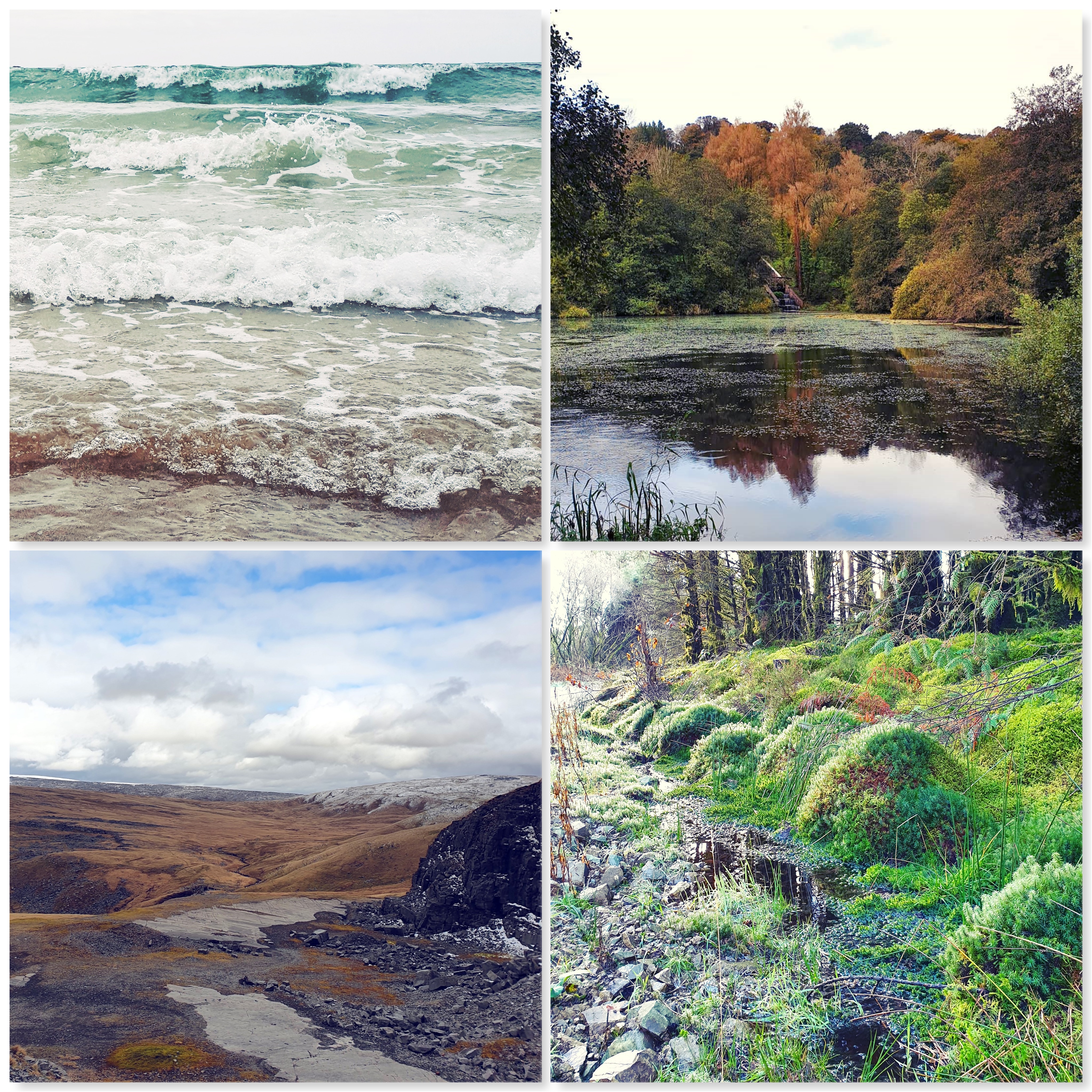
Ocean, lakes, mountains, forest © Lisa Shambrook

As someone who suffers from extreme anxiety and has been crippled by bouts of depression, I know nature is not a cure – it would be patronising to claim it is – but it does enrich my emotional state, and is part of my coping strategy.

Put yourself into nature © Lisa Shambrook

It’s been proven that just looking at images of nature can lift moods, and can offer a boost of serotonin. So, to offer support and a moment of lightness I’m going to share some moments of nature that have helped me. I use nature, and pretty things, to keep my anxieties and panic at bay, maybe they can help you.

Bluebells, primroses, peony, aquilegia © Lisa Shambrook
Find trees © Lisa Shambrook
Notice the detail © Lisa Shambrook

Please remember we can be there for each other, not just for walks in parks, but for the serious stuff, the times when darkness invades and our mental health is at the bottom of the pit.

Look to the light © Lisa Shambrook


Ask for help, seek out counselling (it helps, but believe me I know how long you have to wait for it!), find people who’ll listen and support you, accept help, and accept medication if that’s what you need.  Watch out for each other, be kind, offer help when it’s needed, and for goodness sake, vote for the parties that want to help, the ones who want to increase mental health provisions and access to all. That’s how we change things, and that’s how we help. Nature is great, and it’s there for us all, but remember there’s more to fixing mental health than looking at pretty things. 

Ask for help, medication, counselling, recovery © Lisa Shambrook

Find what works for you.

Spent – When You Have Nothing Left To Give – World Mental Health Day 2020

October 10th is World Mental Health Day, and 2020 needs one.
Twenty-twenty has been a year like no other, and with years since 2016
 getting progressively more difficult, this one really took the proverbial biscuit.
Our state of mind and mental health is paramount,
and sometimes all you can do is look after yourself.

Mind points out: According to our research, with over 16,000 people, we know that more than half of adults (60%) and over two thirds of young people (68%) said their mental health got worse during lockdown. We know that many have developed new mental health problems as a result of the pandemic and, for some of us, existing mental health problems have gotten worse.

Personally, lockdown was a relief, a moment out of time when my mental health thrived. Staying at home, going out only for necessities and spending time in nature worked wonders on my emotional state. It’s the mixture of chaotic messages, ideas, rules, hypocrisy, and out of control official governmental plans since lockdown ended that have wrecked my mental health.

I suffer with severe anxiety and panic, depression, self-harm and self-destructive behaviour including dermatillomania and eating disorder, and I’m waiting ASD assessment. I live for routine, so any changes are difficult to deal with. When supermarkets introduced one-way systems, masks, social distancing, queues to get in, I took my daughter with me for support. Panic rose every time I went for the first few weeks, with panic attacks inside the shop, and even outside when I was asked why there was more than one person shopping for my household. I will add that Tesco was very supportive when I explained my daughter helping, plus I was also shopping for my elderly father who was shielding. Once I’d got used to it, I then struggled when restrictions were lessened.

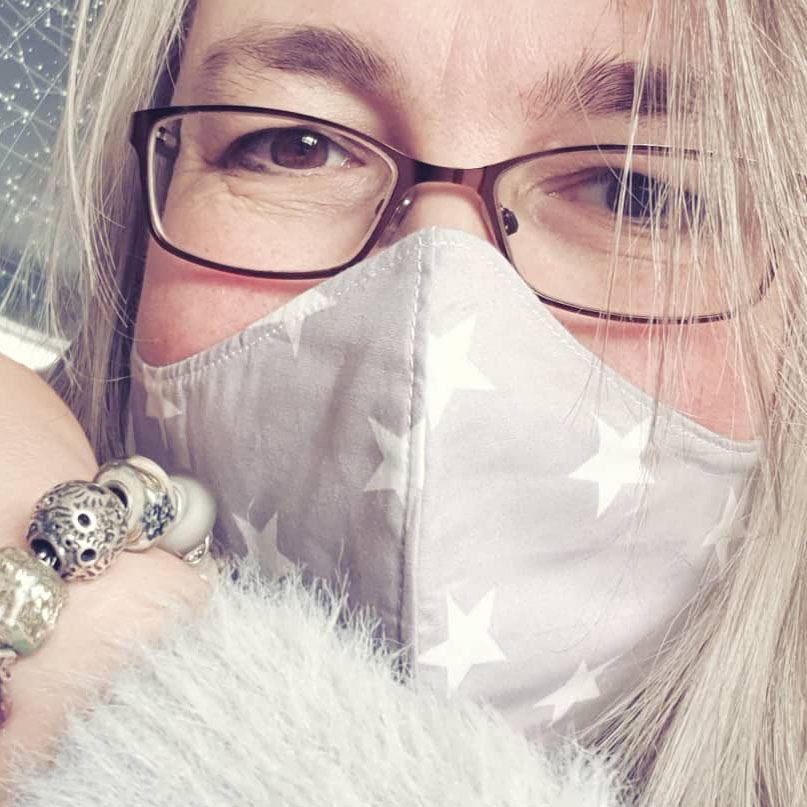
Mask © Lisa Shambrook

I had problems wearing a mask to begin with. Sensory issues meant that anything covering my mouth created an unbearable urge to panic. I had to retrain my mind to accept that wearing a mask was a protection for me, and when I added that to my fear of contracting Covid19, and practising wearing a mask, bit-by-bit at home, I was able to wear one.

There are other problems, this year has been especially generous with complications and troubles, but I won’t dwell on them. This year has left many with heightened anxiety, depression, stresses and much more.

So, how do you deal with it? How do you deal with emotional exhaustion, both mental health related and in normal life – because nothing has been normal this year.

This is what I posted yesterday:

Autistic shutdown is often caused by emotional and/or physical overload, meltdown, overwhelm, change, and other situations that become too much. It’s like having a dead battery. Many people, neurodivergent and neurotypical, can experience the sensation of being utterly spent, a lack of spoons (Spoon Theory by Christine Miserandino), and emotional exhaustion. Sometimes you have to give in to it. You can watch circumstances overtake you, your battery runs on emergency, and you desperately claw at the edges of the cliff you’re clinging to. Sometimes, if you’re not careful, you fall.

What can you do?

Take it easy. Take it one step at a time. Rest, Sleep, and allow yourself to recharge. You might bounce back quickly – a nap might be all you need – but you might need time to readjust, reassess your position, and small steps are fine.

I washed my hair and felt stronger, but aside from eating chocolate, yes, that counts, I didn’t do much until my brain had quietened and I’d been able to shut out some of the things that were shouting at me.

Family © Lisa Shambrook

Words of encouragement help, and here I will link an article I read the other day which made me cry because it was so true. This is How You Love Someone With Anxiety by Kirsten Corely. You can’t ever say “It’s okay,” too much, we answer texts immediately and panic if our texts go unanswered, we read too much into everything, and if it all gets too much, and it often does, we need to be held and be told “It’s okay.” Being hugged by someone who loves you can cure or help the worst things you fear. Real life hugs and virtual hugs are important. Your family can be your biggest support.

Nature is my saviour. When things get too much I get out. I have a dog, Kira, who has severe panic and anxiety, and cannot be walked near people or other dogs, so we go to the forest. I am blessed to live close to Brechfa Forest and there are multiple trails through woods and forest that we can take Kira without seeing anyone. This is a life saver, both for me and for Kira. When Kira’s walked locally by the road on pavement, she’s hyper-alert, aggressive, and full of panic – it’s not fun for anyone. Even a local dog trainer who trains guard dogs, admitted defeat with Kira, she’s a damaged rescue, who has only known real love from a few people in her life. In us, she’s found trust and unconditional love and her mental health thrives in our home. In the forests she is in her element and becomes a soft-natured, fun-loving, relaxed and adventurous pup. And that’s how nature works for me too.

Nature and Dog Walks © Lisa Shambrook

This year, with its trials, has taught us some of the most important things that life has to offer, and family and nature seem to top that for me. My friend Jessica Maybury wrote this piece The Greatest Travel Adventure Of 2020 and it resonates with me. Get out and see where you are. Since first having a dog, twelve years ago now, we’ve explored locally, and it’s a revelation. I haven’t discovered many new places this year, but it’s been a relief to know my locality and where I can go for peace. Go explore!

Sometimes medication can be the best help. Go and see your GP and get professional advice, there’s a place for medication, and there should be no stigma around taking meds that help you. No one blinks an eyelid when someone takes medication for diabetes or heart disease, or medication for thyroid issues because your thyroid is not producing what it should. Mental health issues arise because your brain isn’t doing or producing what it should and sometimes medication can put that right. I have taken antidepressants for periods on and off throughout my life, and I currently take medication for my anxiety attacks.

Cracks © Lisa Shambrook

The same goes for getting diagnosed with any mental health or other condition you might have. It’s tough to get a mental health diagnosis these days, the NHS is severely underfunded and many resources are difficult to get, but please fight for them. I’m about to begin counselling and hope it’ll give me some relief. My adult daughter received her Autism diagnosis just two months ago, after a 30 month waiting list and many years being let down by child and adolescent mental health services in her teens. The resulting diagnosis was definite and a huge relief. Validation can go a long way to finding peace or at least coming to terms with who you are.

And, perhaps, that’s the most important thing, coming to terms with who you are and what your needs are. You are you, and you’re enough whether you are in perfect health, or whether you have physical or mental health issues. Find what works for you, find support, and I hope you find what you need.

What helps you when life gets too much? How do you recharge?
I wish you all peace of mind in these tough years.

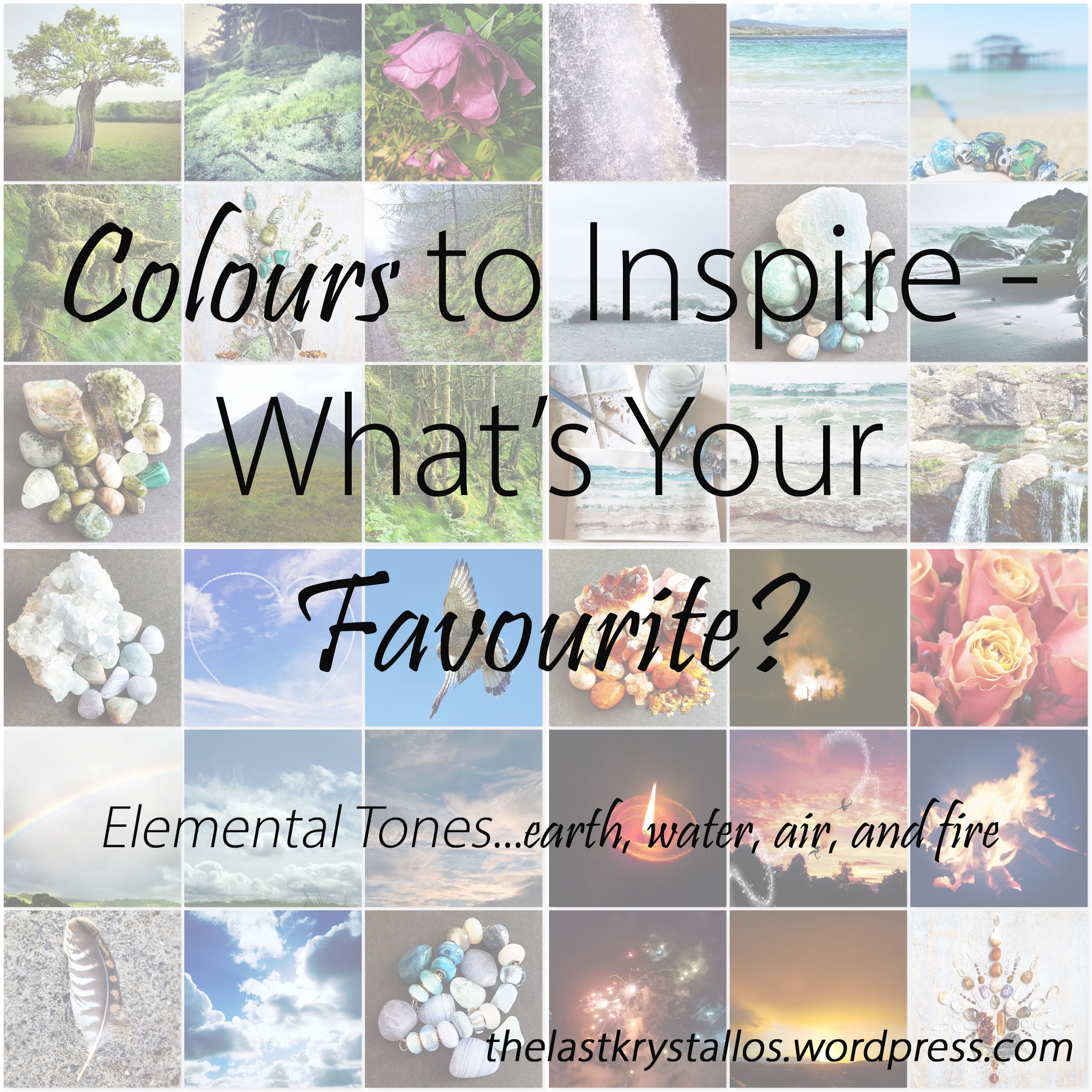
Colours to Inspire – Elemental – Earth, Water, Air, and Fire

I’ve blogged about my favourite jewel, neutral, and metallic colours
and I’m currently inspired by elemental themes and tones…

Colours to Inspire - Elemental - Earth Water Air and Fire - The Last Krystallos.

The elementsearth, water, air, and fire – make up the essence of nature, the core of our existence, and they feed our spirit. The colours of the elements are deeply ingrained within our lives. Greens, browns, and earthy tones clothe the forests, mountains, and valleys. All manner of blues along with cloudy white and grey, and golden sunshine tones fill our skies. Ocean blues and greens, clear rivers, and fluid crystalline colours run through our lives in water. Sizzling reds, oranges, and yellows spark passion and fuel our emotions with fire.

Which of the elements calls to you, and do their colours inspire you?

colours, earth, tree, forest, moss, green jewels, crustal grid, rose, crystals, mountain, the last krystallos

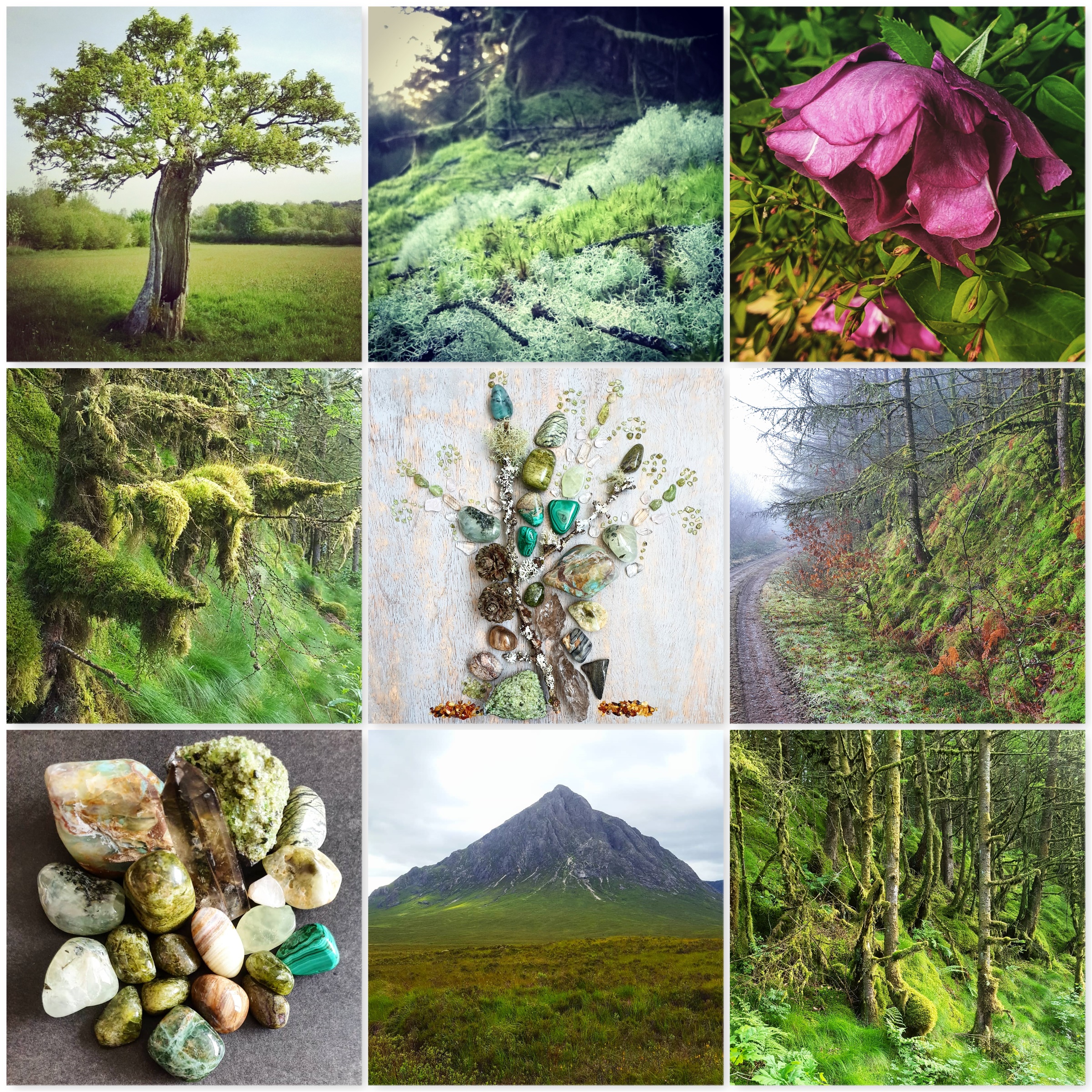
Earth © Lisa Shambrook

Earth – the greens of the forest have been my favourite colours since I was a child, offering peace, calm, and tranquillity in a heart that was often anxious and unsettled. As an adult I go to the forest and to the hills for peace, to renew my senses and to recharge. Listening to the wind susurrate through the trees, whispering serenity to my soul, and feeling my feet softly stepping on springy moss always relieves my heart and allows me to regain my breath. It’s like uttering a prayer in solitude and then listening to nature’s response as birds twitter, trees whisper, and soft music lightens an aching heart.

colours, water, ocean, sea, waterfall, crystals, thelastkrystallos

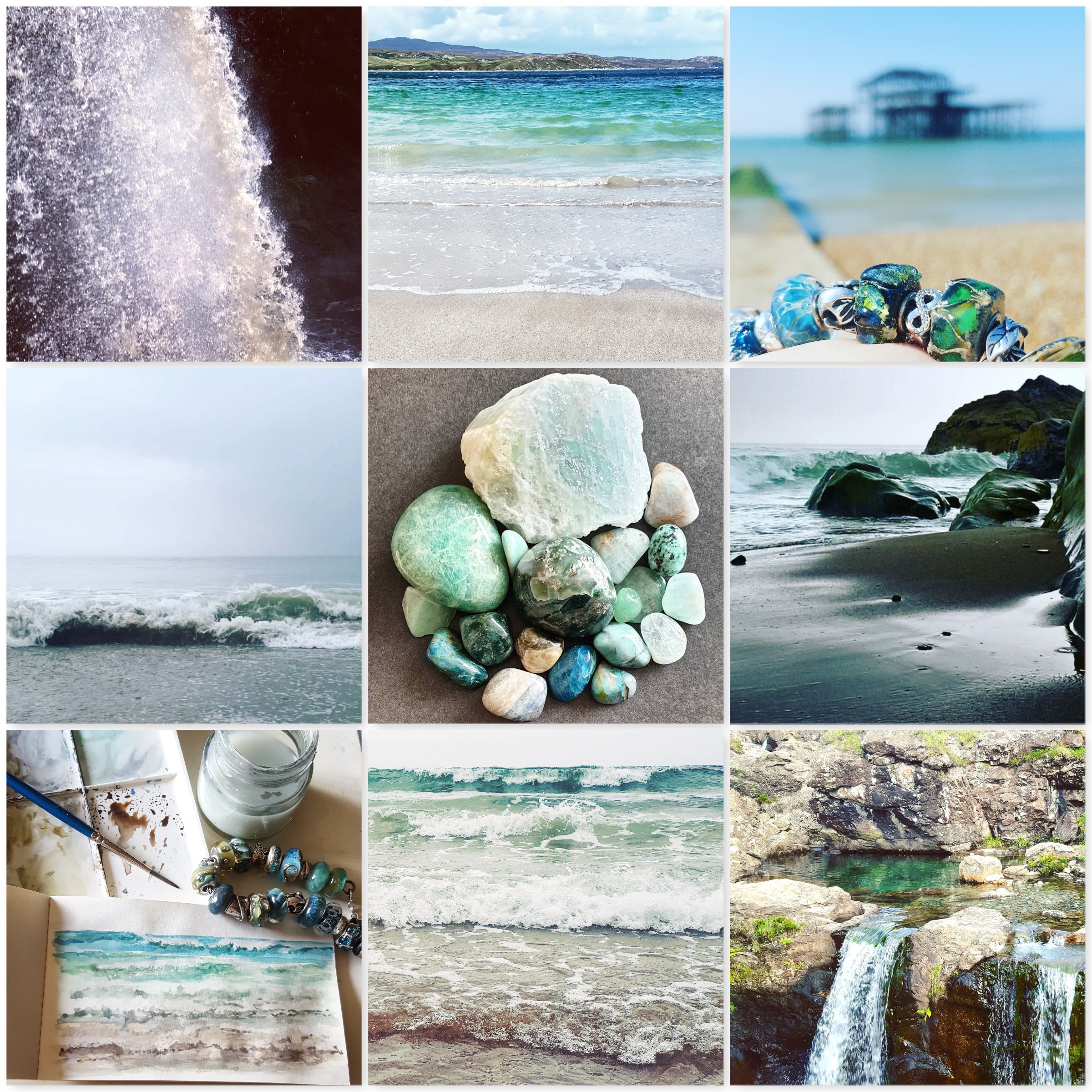
Water © Lisa Shambrook

Water – the ocean with its blues and greens is the opposite for me. A calm sea is lovely, the sun twinkling like stars on its surface can also still a racing heart, but I love the sea when its waves are crashing and the pebbles tumble beneath them. I come from Brighton and pebble beaches have a rousing effect on me as the sea churns stones as it rises and falls. I have travelled the UK and come to love soft sand beaches in Wales and Scotland, and could spend hours staring at the sea as the tides change. I have seen the ocean switch in front of me from its crystal quartz white surf, to aquamarine, then changing to adventurine and amazonite green, before deepening to turquoise, then to apatite blue, and finally to a deep dark sodalite navy. The sea can change from blue, to green, to brown and to grey, and it’s changeable nature is what inspires me. Water is the element that speaks to me most, and one that guides me. Water cannot be stopped, if it encounters an obstacle, it goes around it and carries on… I need that wisdom in my life.

colours, air, crystals, sky, kestrel, rainbow, clouds, feather, crystal bracelet, the last krystallos

Air © Lisa Shambrook

Air – have you ever stood on a mountainside and felt the wind billowing through your hair? It’s exhilarating and freeing. Air offers release and liberty; if I could be a creature I’d be a dragon, flying free up in the thermals… Birds fascinate me, upon their feathery wings they fly through our atmosphere, light enough to do so, and free enough to travel wherever desire takes them. Air is what drives us, filling our lungs, and moving us forward. And the colours I associate with it change from the blues of the sky, to the white of clouds, to grey storms, golden sunshine, and all the colours that merge in auroras and celestial azure skies.

colours, fire, crystals, roses, candle, dragons, fireworks, sunset, crystal grid, the last krystallos

Fire © Lisa Shambrook

Fire – the easiest of the elements to imagine. Known for passion, anger, and fierce emotions, it flickers with red, orange, and yellow. Fire is destructive and renewing, full of danger and desire, it harnesses ambition and fuels dreams, but it can also offer peace and safety. Seeing light amid darkness can guide you home to a hearth and food. Watching a flame dancing atop a candle is hypnotising and relaxing, and listening to the crackle of a fire burning within a fireplace is the symbol of home comfort and sanctuary.

Colours to Inspire - Elements - Earth Water Air and Fire - The Last Krystallos

Earth, Water, Air, and Fire © Lisa Shambrook

The elements need each other to survive. Fire feeds on oxygen in the air, and though it can destroy trees and grass and flora, the earth contains it, and water can quell it. Once scorched, the earth can renew and life returns with the help of water. Water is a constant, the ocean rises and falls every day ruled by the moon above, it feeds and helps everything grow. Air moves the water to where it’s needed, and keeps the atmosphere exactly as we need it. And earth, the rock beneath our feet, holds everything together, keeping us safe upon this rock that is clothed in air and water and encases the fiery molten core that keeps our earth alive.

The elements are both chaos and essential,
and when I’m asked which is my favourite – I’m not really sure…

What’s your favourite elemental colour and what does it mean to you?

The Magic of a Fairytale Forest – Brechfa Forest

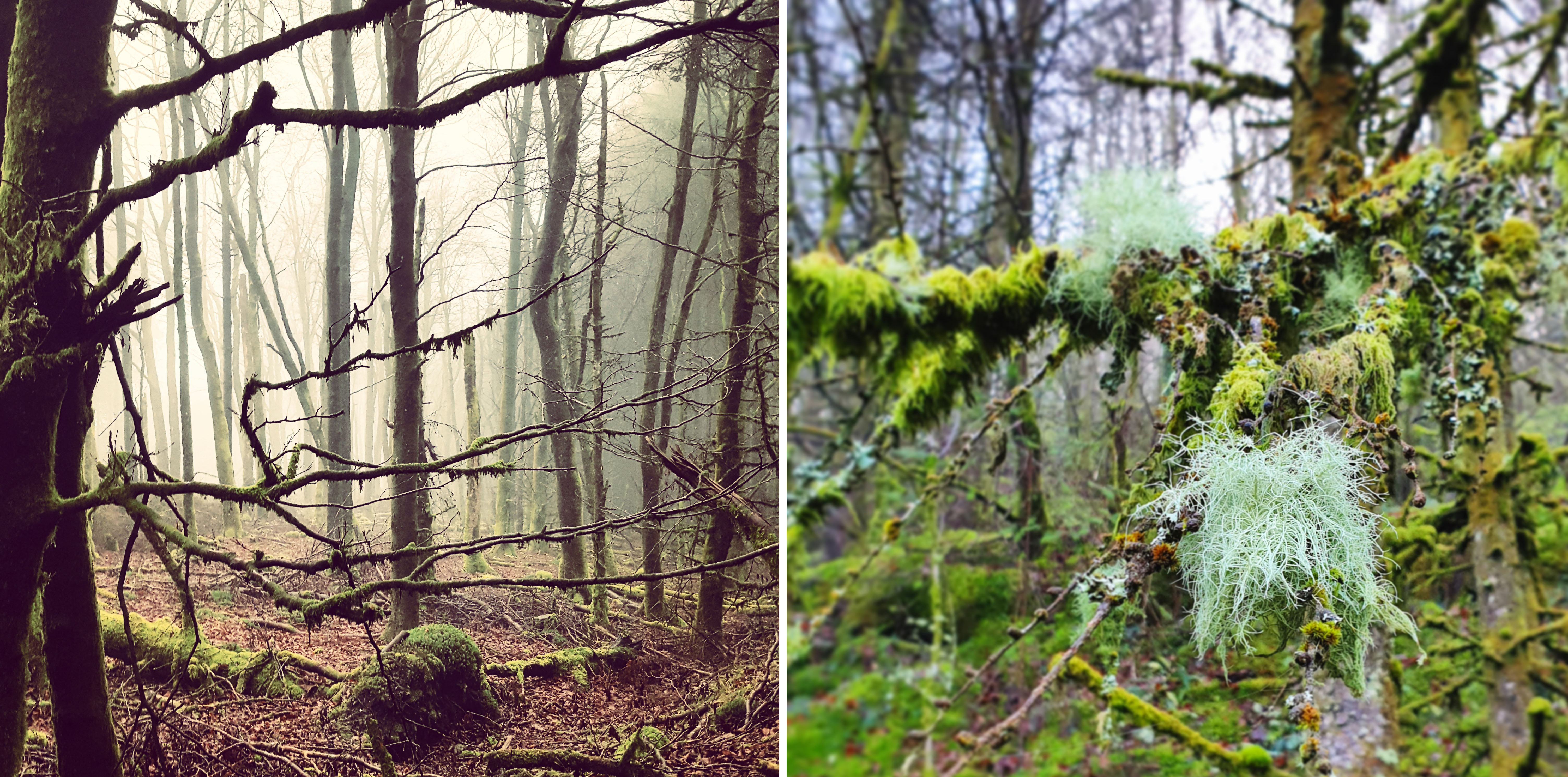
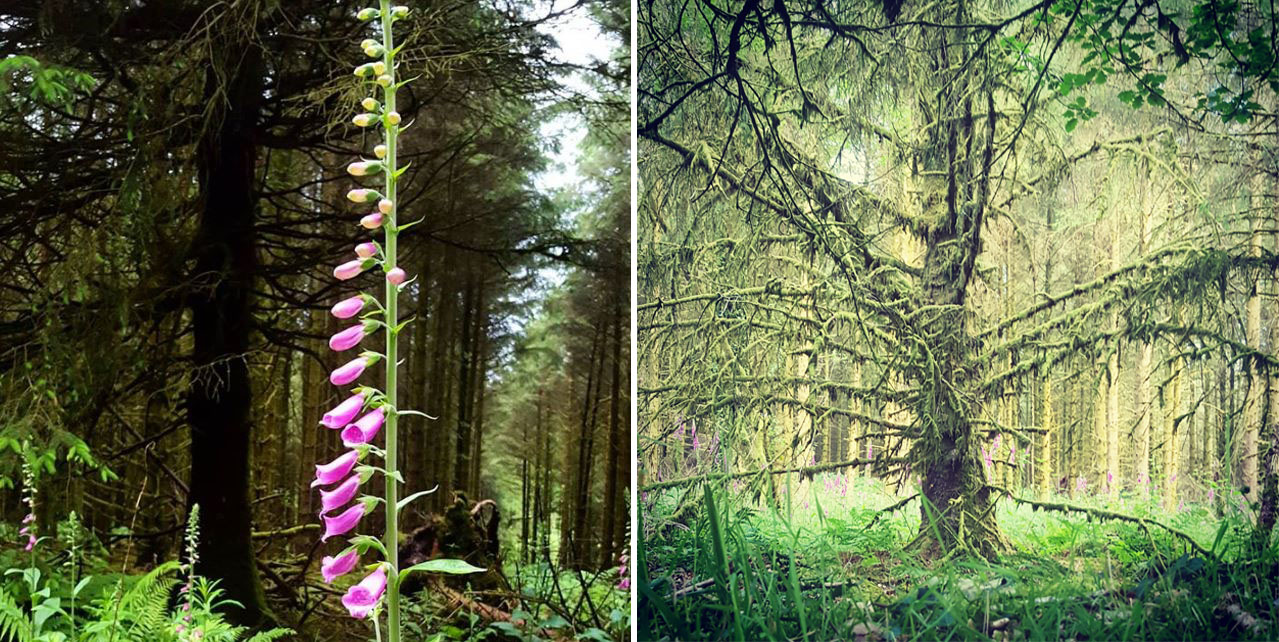
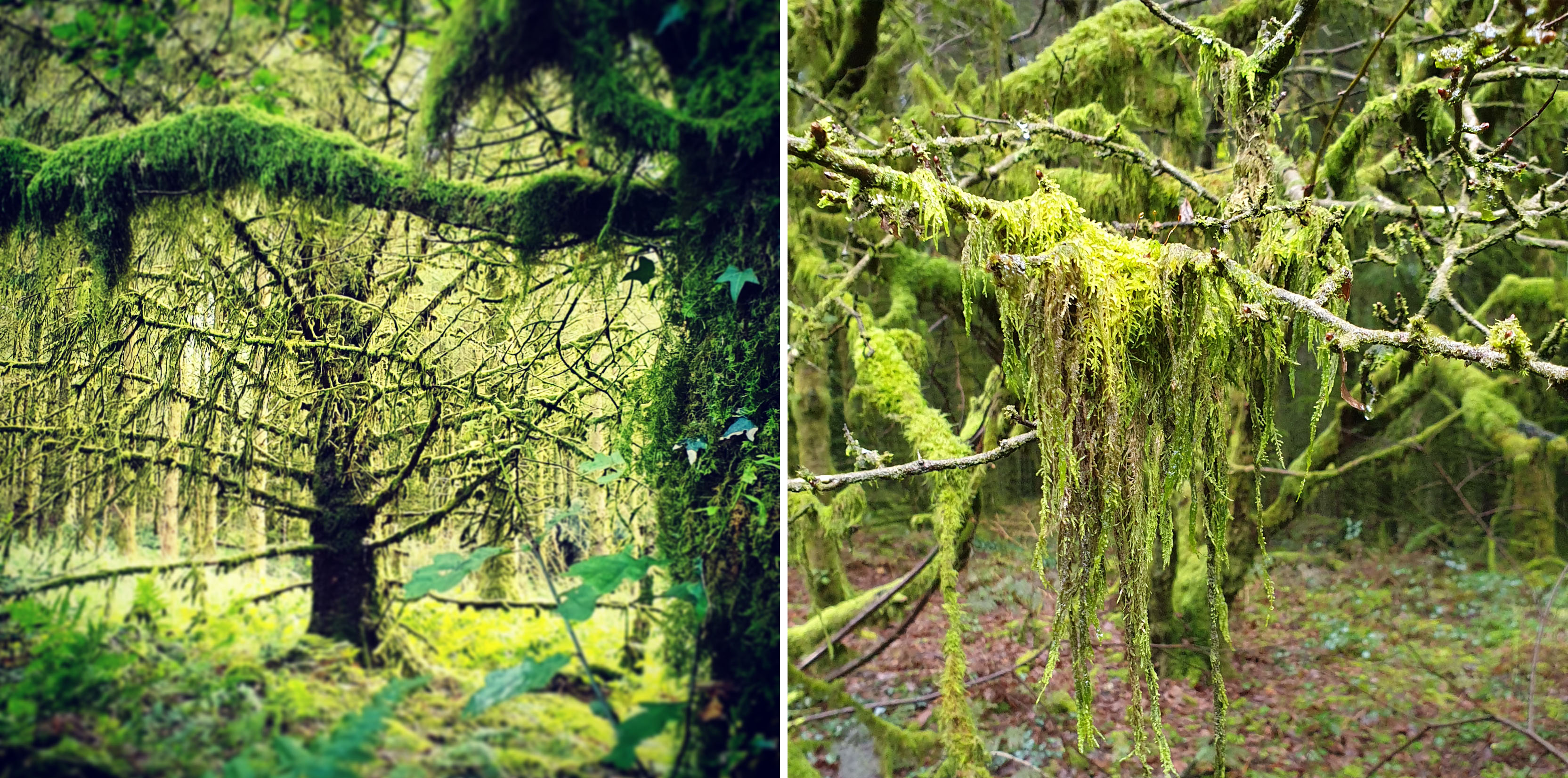
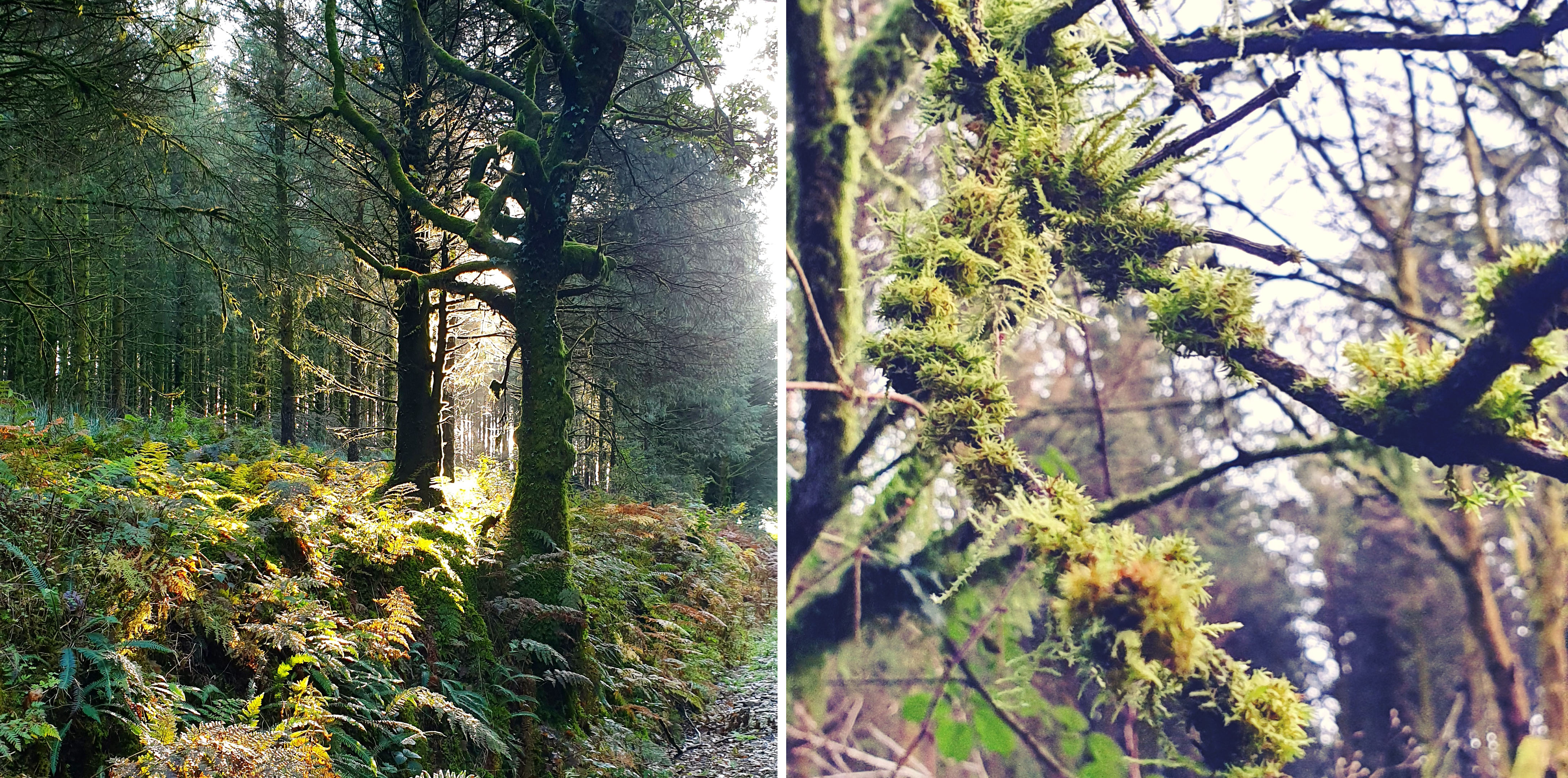
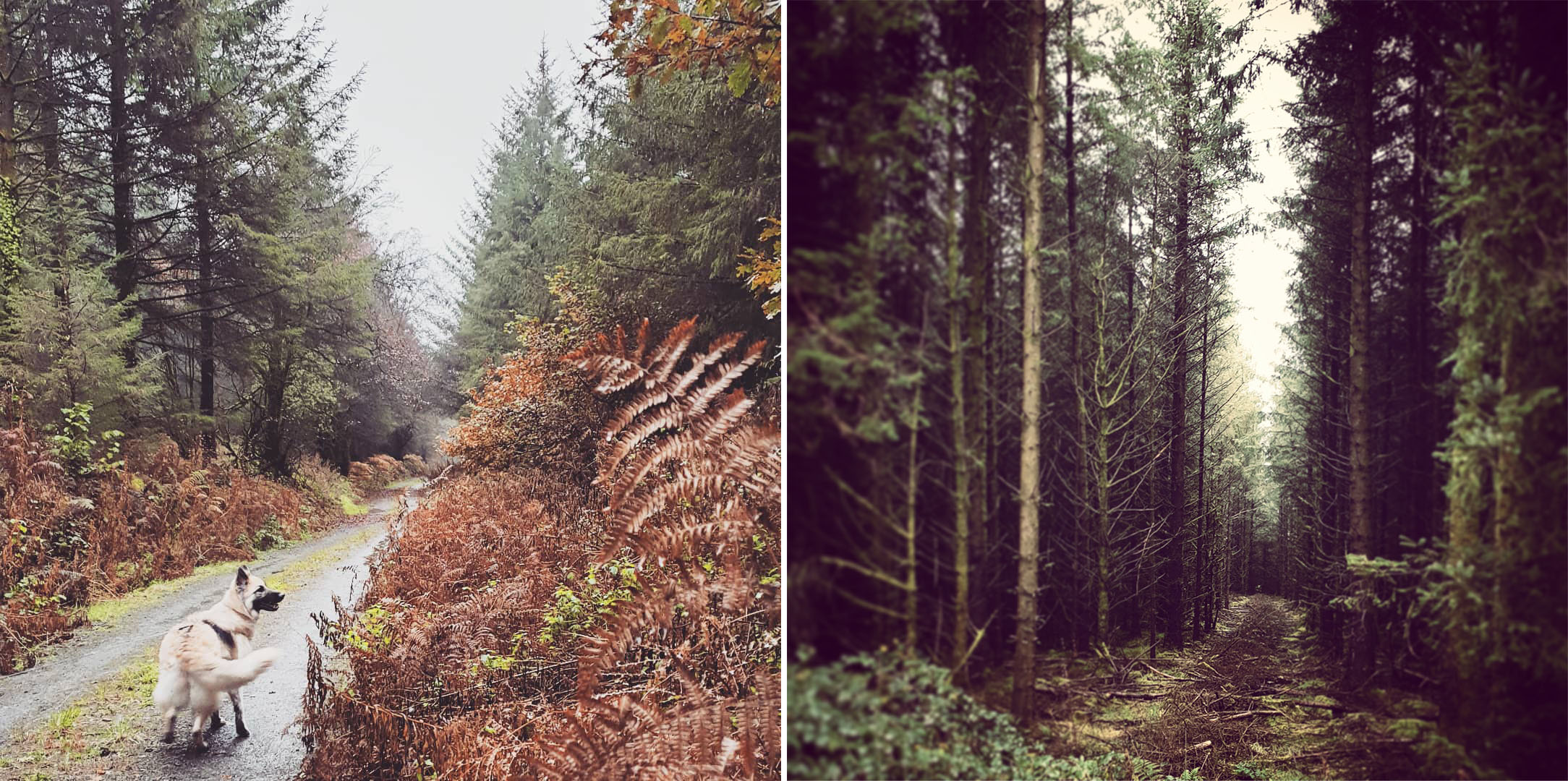
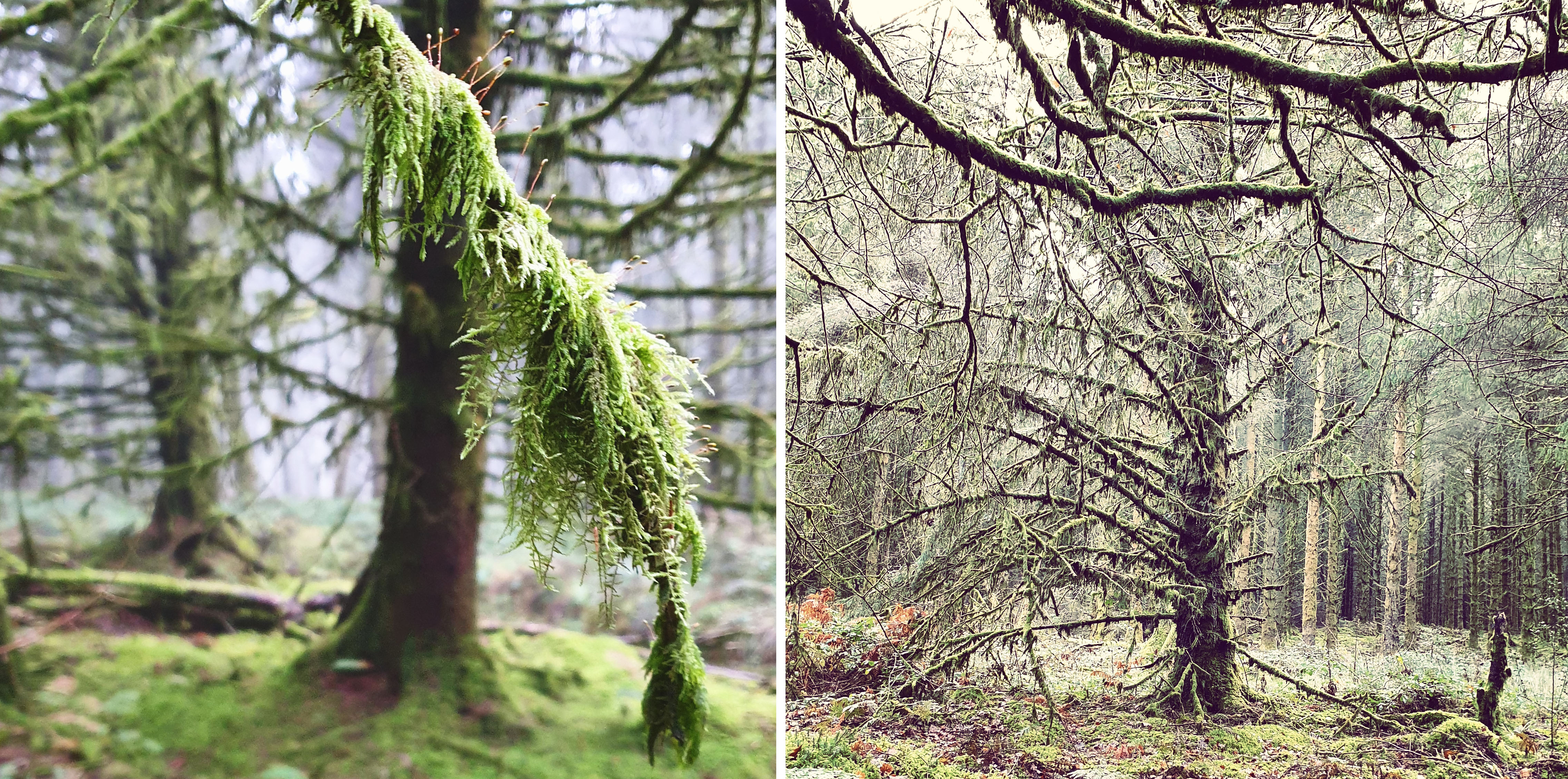
The beauty of Brechfa forest captivates me offering magic and enchantment and a place to give respite to my weary soul. Gnarled trees clothed in moss and lichen. Tall, spindly spruce, pine, and larch decorated with cones and needles, interspersed with oak and beech, and hedgerows of bracken and fern. Jewel greens all year round finished with autumn copper then silver winter frost.

The Magic of Fairytale Forests – Brechfa Forest - The Last Krystallos

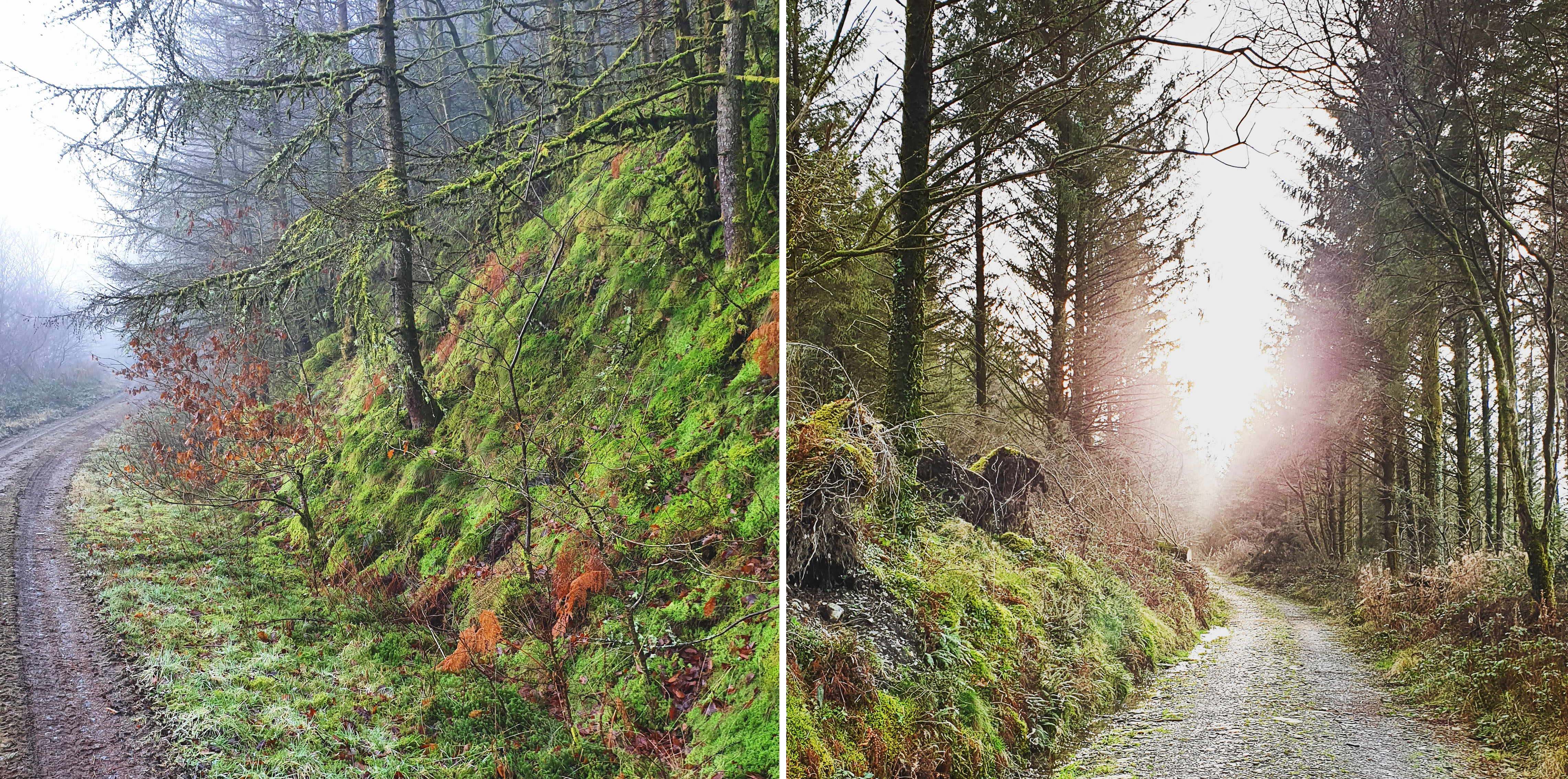
January brings snowfall, frost, and fog with wispy cloud dropping into the tall pines creating an ethereal landscape. Walking through the glare of light from the low sun makes it bright and crisp and magical as it shimmers across the frost and moss. You might even see the copper winter coat of a fox as it dashes across the forest floor.

Images of January Brechfa Forest trees

© Lisa Shambrook

February is another month of mist and magic, sparkling through branches clothed with the soft froth of reindeer moss. Reindeer moss swathes the trees like jewels on a chandelier in a soft seafoam green. Bright peridot greens contrast beautifully with the sharp burnt-orange and browns of dead bracken, ferns, mulch and leaves.

Images of February Brechfa Forest trees

© Lisa Shambrook

In March, and its preceding months, stormy gales whistle and rustle through the spires. Rain and wind are common in Wales and wet, windy winters add to the streams and puddles and saturated land. Pine and spruce are known to have shallow root systems and sometimes you’ll come across fallen trees. Brechfa is looked after by the Forestry Commission and fallen trees across the roads are cleared quickly, but sometimes you’ll need to hop over or circumnavigate fallen logs on the tracks.

Images of March Brechfa Forest trees and moss

© Lisa Shambrook

April brings lighter showers and the moss swathing the forest floor act like sponges, holding many times their own weight in water aiding the forest as sponging, cooling and humidifying systems. New growth becomes evident as bright green sprouts from branches and spring flowers like bluebells and toadflax intermingle with moss over the forest banks.

Images of April Brechfa Forest trees

© Lisa Shambrook

May spring growth spread across the branches, and the past seasons’ dead leaves are covered with grass, lichen, and golden-green moss. Green tinged cones are pushing upright on spruce trees like decorative candelabras.

Images of May Brechfa Forest trees and a dog

© Lisa Shambrook

June is predominantly green, autumn colours are gone, and peridot-green is back in charge. Moss swathes the forest floor, trees, and rocks and is sumptuously soft and yielding. There are over one thousand species of moss in Britain, with more yet to be discovered, though many people will only ever notice two or three varieties. Get right down on the woodland floor and you’ll see the intricate ecosystem living right there amongst the moss and lichen.

Images of June Brechfa Forest tees and moss

© Lisa Shambrook

July sees the forest thickening up with moss, leaves, and foliage, and the additional colour of pink threads through Brechfa. Thistles become homes to the bees, and it’s a real treat to wander through the forest on a warm summer evening and come across purple thistles bending under the weight of sleeping bees! Foxgloves grow tall and said bees also adore their pink bells nodding in the breeze.

Images of July Brechfa Forest trees and Foxglove

© Lisa Shambrook

August and springy moss carpets the forest floor and drapes like swags of feathery curtains from the fir trees. The woods are thick with green and if you look carefully you could swear the fae are hiding in the undergrowth. Magic emanates from every branch.

Images of August Brechfa Forest trees and moss

© Lisa Shambrook

September’s autumn sunshine glistens on the gossamer webs that suddenly fill the boughs and you could be lost in Mirkwood. Find the wider tracks to walk if you’re keen to avoid the spiders! Toadstools and mushrooms emerge amongst the moss and mulch, and enjoy the colours as the leaves begin to turn on the oaks and beech trees, and the sunset touches bracken and fern with gold.

Images of September Brechfa Forest webs and mushroom

© Lisa Shambrook

October and autumn is here. Leaves have been painted with brass and copper, mosses are tinged with gold as they sport thready stems ready to spore, and larch needles turn golden-yellow before they drop. Cones adorn the firs, and acorns, beechnuts, and hazelnut shells are strewn underfoot, crunching beneath your feet. There’s magic in the air as the cool breeze wafts through the forest.

Images of October Brechfa Forest trees

© Lisa Shambrook

November brings frost and the pines are dark and foreboding, but the rest of the forest glistens with winter sun and crisp coppers and burnt-orange as the bracken dies and autumn leaves fall. The colours dance in the late sunshine and the birds twitter with warnings of weather and cold.

Images of November Brechfa Forest autumn trees

© Lisa Shambrook

December and the forest opens up again, with winter light glaring across bare boughs and weaving through the mist. It’s quiet and expectant and maybe snow will fall, coating the trees and drifting over the roads like icing sugar.

Images of December Brechfa Forest trees

© Lisa Shambrook

And into the forest I go, to lose my mind and find my soul
– John Muir             

Colours to Inspire – Metallic – What’s Your Favourite?

I’ve blogged about my favourite jewel colours and neutrals,
so today I’m looking metals…

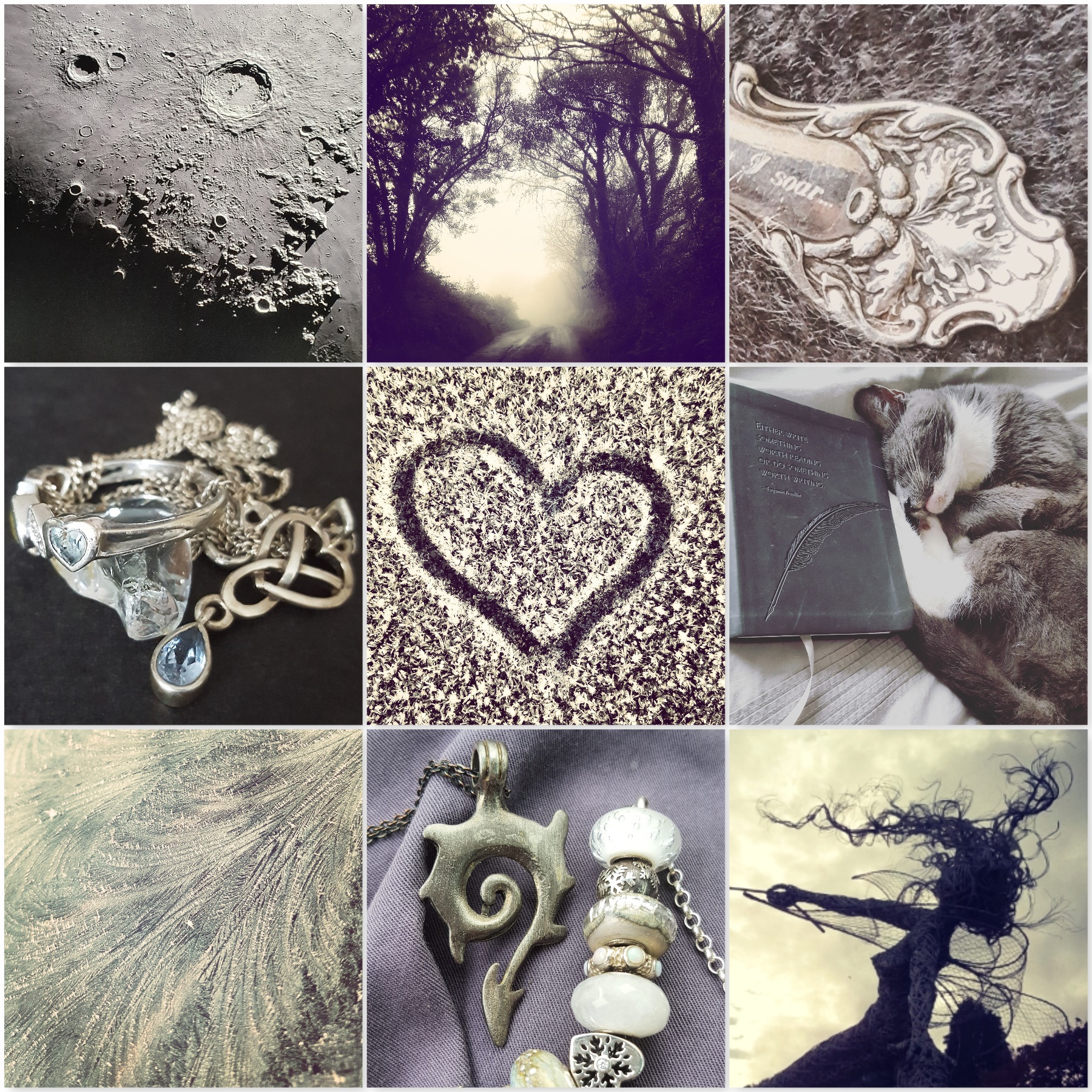
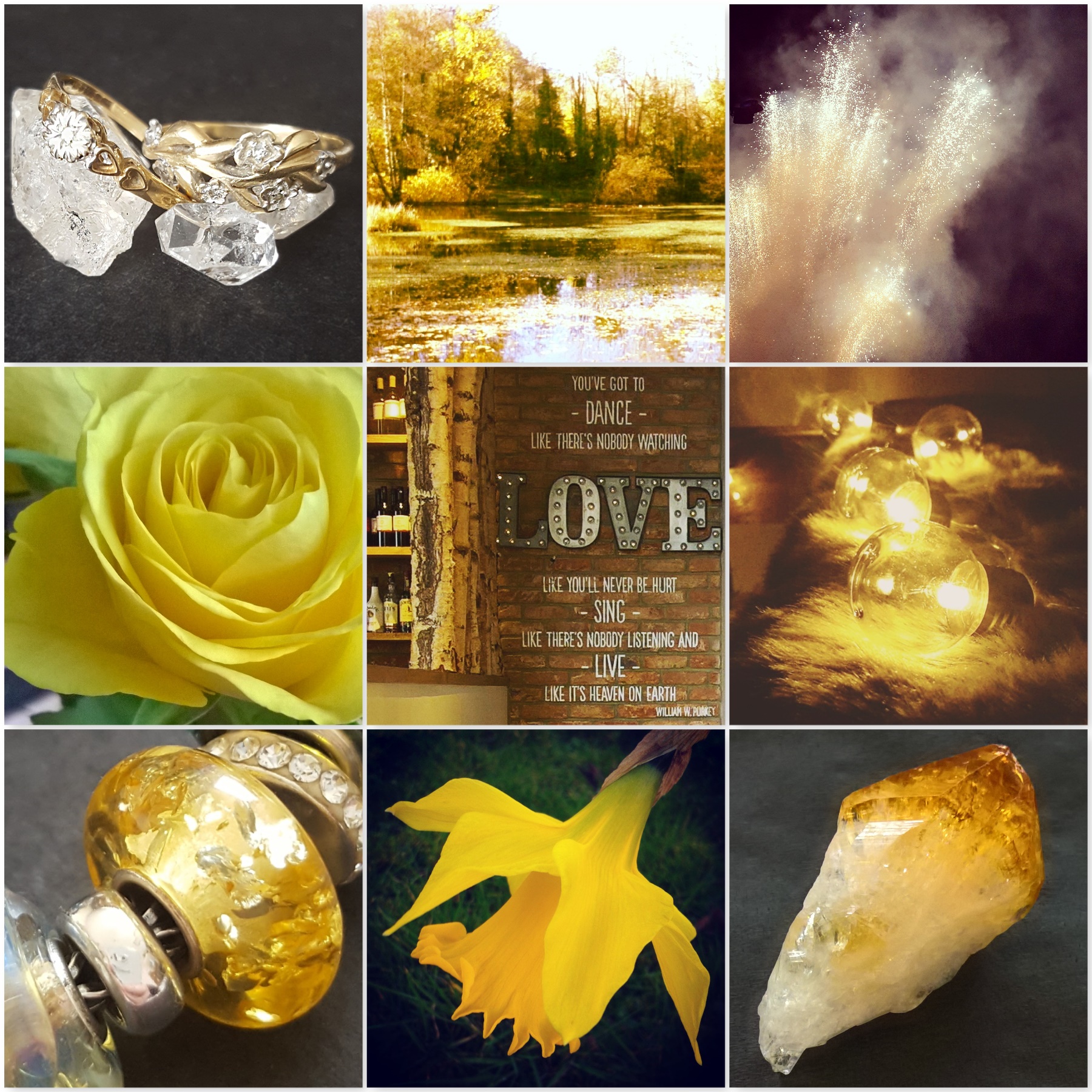
Collage of photos depicting silver, gold, brass and copper photos for Colours to Inspire - Metallics, for The Last Krystallos blog

Metallic colours are striking, bright, crisp, and shiny. Any colour can be metallic, but I’m sticking with traditional colours of metals – silver, gold, brass, and copper. Bronze and brass are both alloys of copper, brass is copper and zinc and has a more yellow colour, and bronze is primarily copper with stronger reddish tones. I have a love of antiqued jewellery, or silver with a patina, and I love how these colours are rich and diverse, and as accessible in the natural world as they are in sleek modernity.

Silver photos: the moon, fog, silver spoon, silver topaz jewellery, frost heart, grey cat, frost, dragon tail necklace, silver fairy, for the last krystallos blog

Sterling Silver © Lisa Shambrook

Silver is my colour of choice for metals, and not just because I’m embracing going grey!
I love silver jewellery, and enjoy wearing greys, pewter, slate, and silver colours.
Silver is enchanting, magical, mystical, and sophisticated…

gold photos: gold herkimer diamond jewellery, yellow forest, fireworks, yellow rose, gold wall with Love quote, fairy lights, lemon amber bead, daffodil, citrine stone for The Last Krystallos blog

Glowing Gold © Lisa Shambrook

Gold is the colour of warmth, not one I wear often,
but it embraces the sun and everything that glitters and reminds me of heat and wealth.
Gold is regal, expensive, prosperous, and successful…

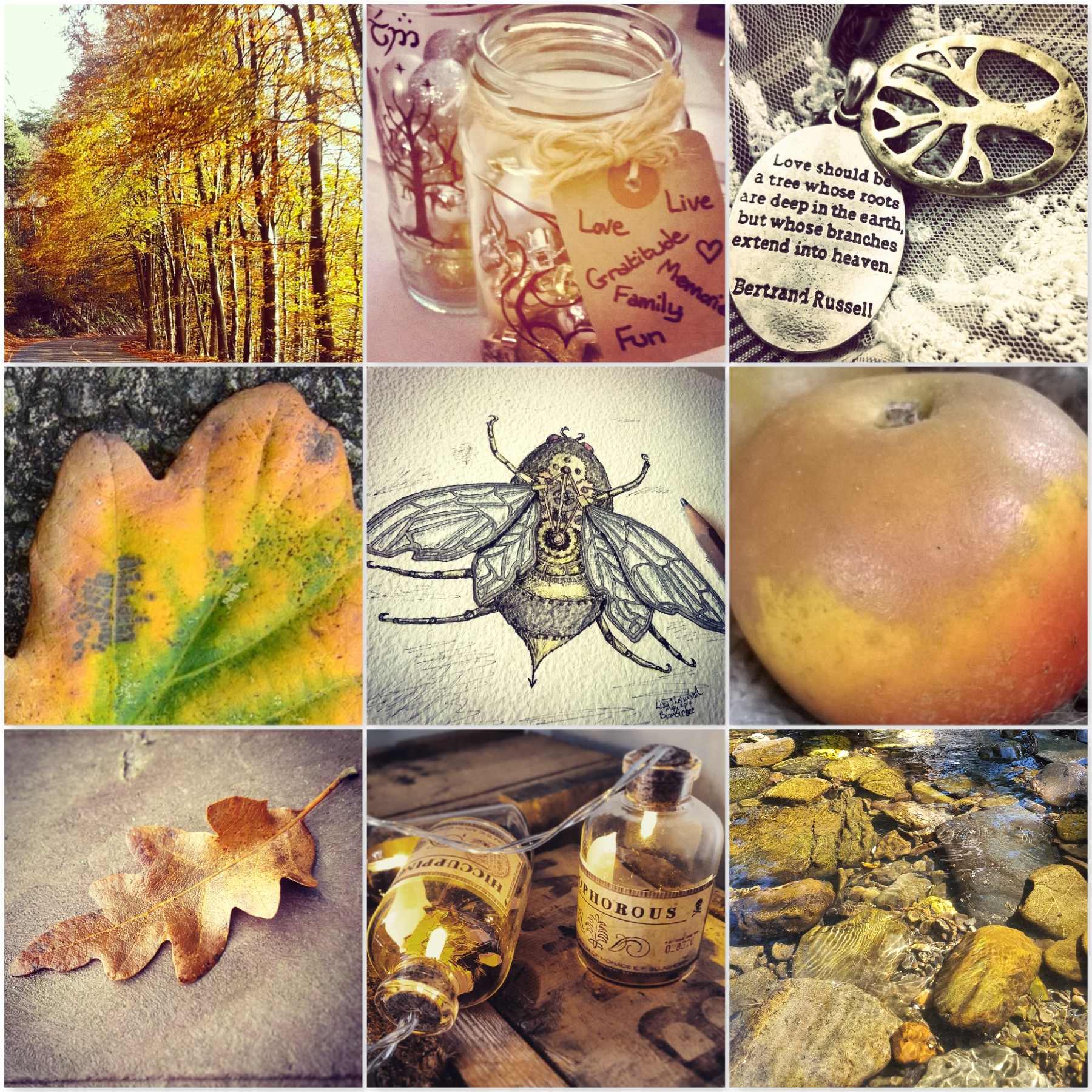
brass photos - yellow leaves, fairy lights, brass necklace, yellow leaf, steampunk bumblebee, russet apple, oak leaf, fairy lights in bottle, river bed in sunlight, for The Last Krystallos blog

Beautiful Brass © Lisa Shambrook

Brass, strangely, for a metal, brass feels soft to me, warm and soft.
The colour of dropping autumn leaves and sculptures.
Brass is warm, welcoming, autumnal, and happy…

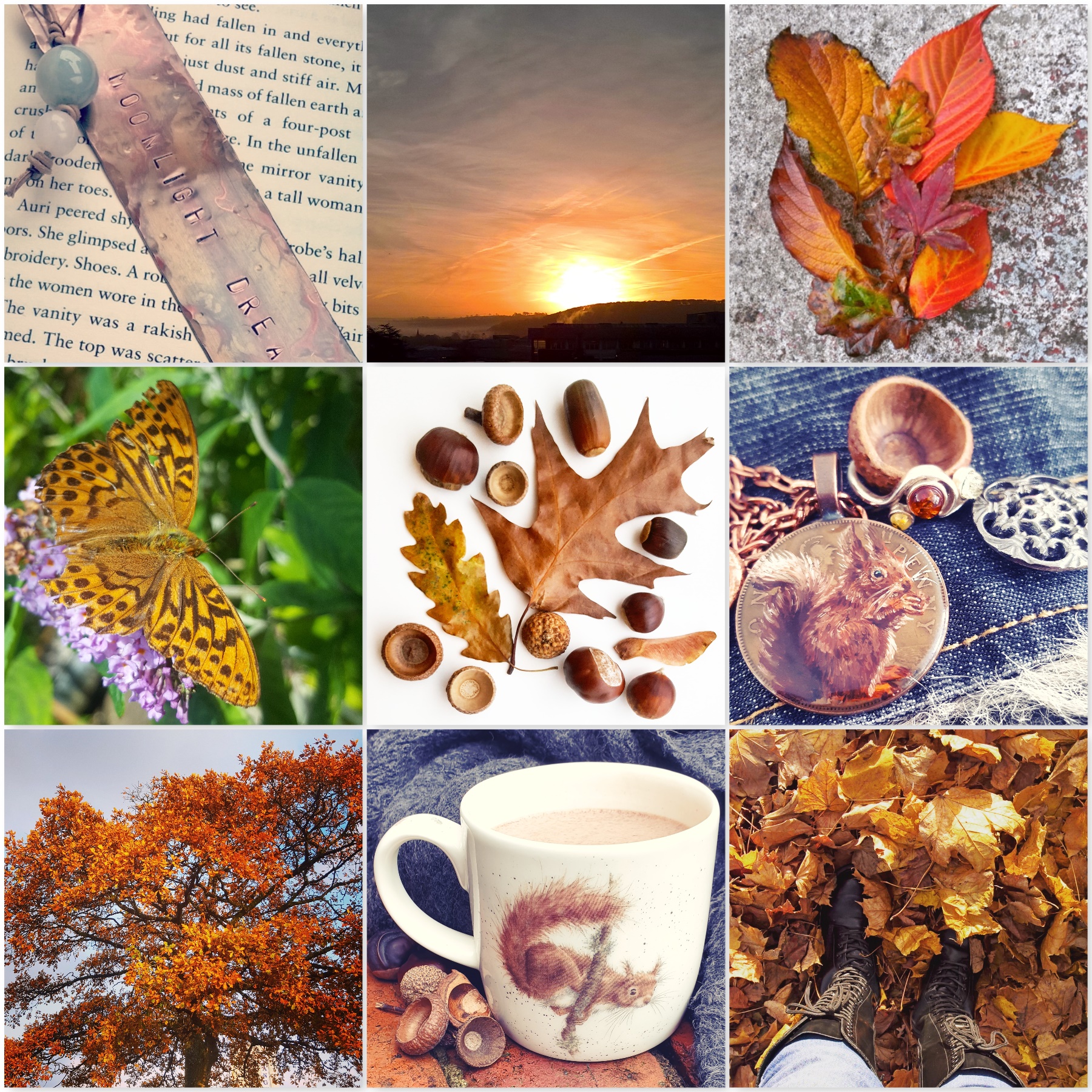
copper photos - copper metal bookmark, sunset, copper red leaves, High Brown Fritillary Butterfly, leaves, squirrel necklace, copper leaves, red squirrel, leaves, for The Last Krystallos blog

Crisp Copper © Lisa Shambrook

Copper always brings images of red squirrels, butterflies, and pipes,
not the smoking ones, but plumbing ones.
Another metal that is autumnal and warm.
Copper is fun, bright, friendly, and down-to-earth…  

What’s your favourite metallic colour and what does it mean to you?

Enchanting October…

October – my favourite month – darker nights, cosy blankets, thick socks, long boots, black cats, any cat, pumpkins, soup, apples, autumn colours, falling leaves, cooler weather, jackets, hats, scarves, gloves, hot chocolate, acorns, conkers, candles, frost, squirrels, bats, toadstools, mushrooms, magic, Halloween, and more… 

Enchanting October - Autumn - the last krystallos

What do you love about October?

Magical Colours of Summer

Though Summer may not be my favourite season, it is still full of magic,
I just have to look for it harder than I do in Autumn and Winter.
In the spirit of embracing Summer, I’m discovering its charm…

Magical Colours of Summer - The Last Krystallos

Summer’s colours are bright and bold, though the ones that enchant me are its blues and softer tones. For me the colour of summer is blue, linked intrinsically to water and clear skies. The sea sparkles with jewel tones. Two years ago we stayed on the north coast of Scotland and visited the most beautiful beach we’ve ever found, and I described the ocean with gem colours: White sand ran from the dunes to the sparkling water, and what water! It merged from every green to every blue you could imagine…from crystal white Quartz froth, to pale Amazonite, and Adventurine, then to Turquoise, and rich Apatite blue, before darkening to the tone of Sodalite. An ocean of jewels!

The sea changes from moment to moment and from seafoam green, to teal blue, to slate grey and myriad more colours. These are my summer tones.

I love how Brighton and Hove’s ocean switches from green to blue by the West Pier. Swgd Eira’s tumultuous waterfall crashes amid diamonds of water and light. Teal-green sea rolls in at Penbryn beach. You can find every blue and green in the sea froth at Staffa. Coldbackie’s jewelled colours spread across the tide. Green is the colour beneath the loch in the Kyle of Lochalsh and in the Isle of Skye’s Fairy Pools. I love the pebbles at Applecross and the blues and greens of Bosherston beach.

Magical Colours of Summer - water - blues - the last krystallos

© Lisa Shambrook

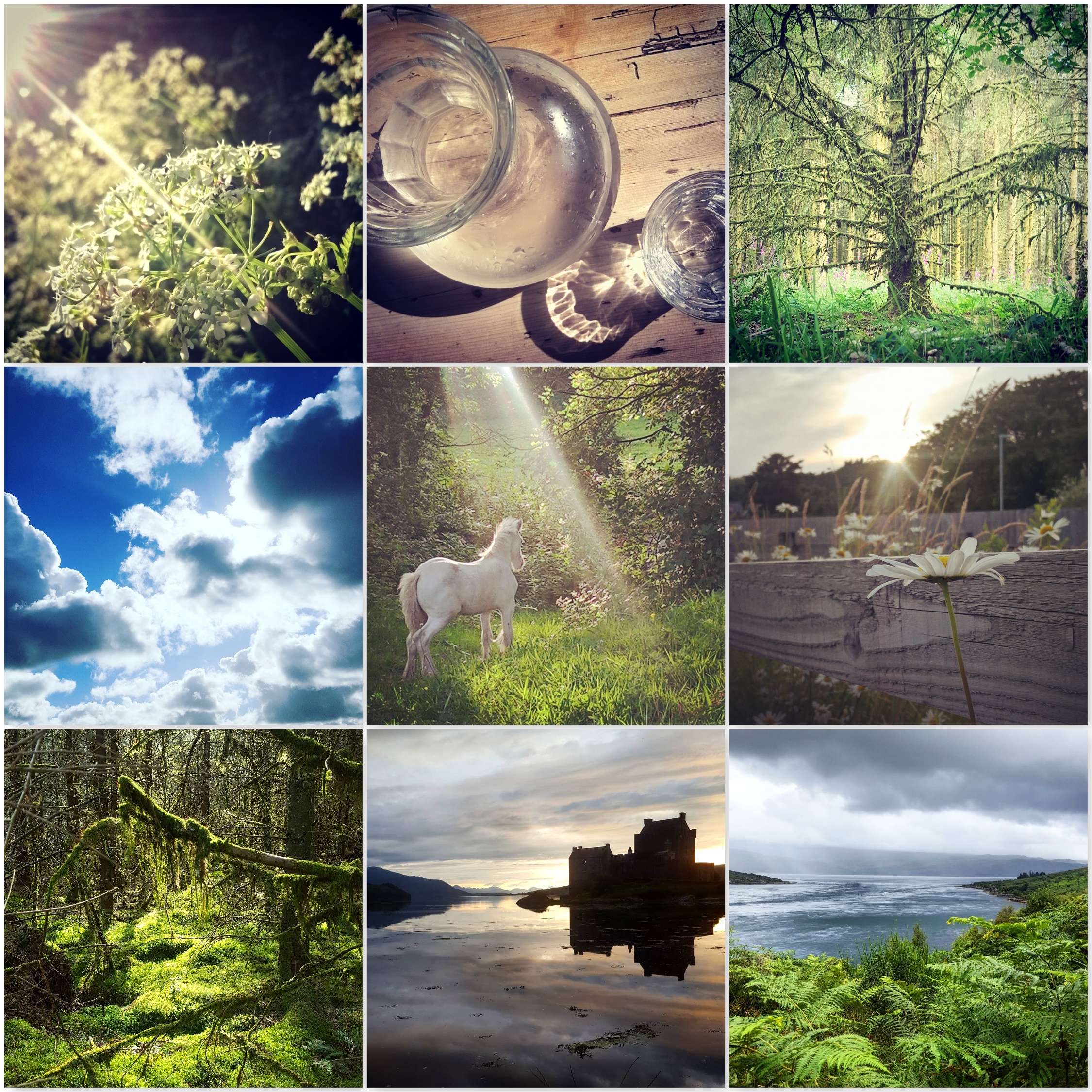
Then nature and light pick up summer vibes. Early evening sunlight shimmering through cow parsley is pure magic. Summer light sinking through the pines in Brechfa forest creates enchantment within the trees and across the moss. The sun beams from behind the clouds, glistening light can touch on unicorns and shine on daisies. Water sparkles, and late evening castle reflections at Eileen Donan Castle bewitch you. The slate-blue loch at Kylerhea is surrounded by summer’s lush green.

Magical Colours of Summer - light - the last krystallos

© Lisa Shambrook

Summer then speaks of roses, figuratively and literally, and the pinks of watermelon and bronze sunsets. I’ve sat on Brighton beach watching the sun sink down beneath the horizon, and got up early to witness the sunrise on Dartmoor, and walked the dog through late evening scarlet dusks. Roses bloom with scents and colour: Rhapsody in Blue, and Audrey Wilcox’s blush pink. Purple foxgloves fill the forests, and Sarah Bernhardt peonies, their petals the colour of strawberry milkshakes, flourish.

Magical Colours of Summer - pink - rose - sunset - the last krystallos

© Lisa Shambrook

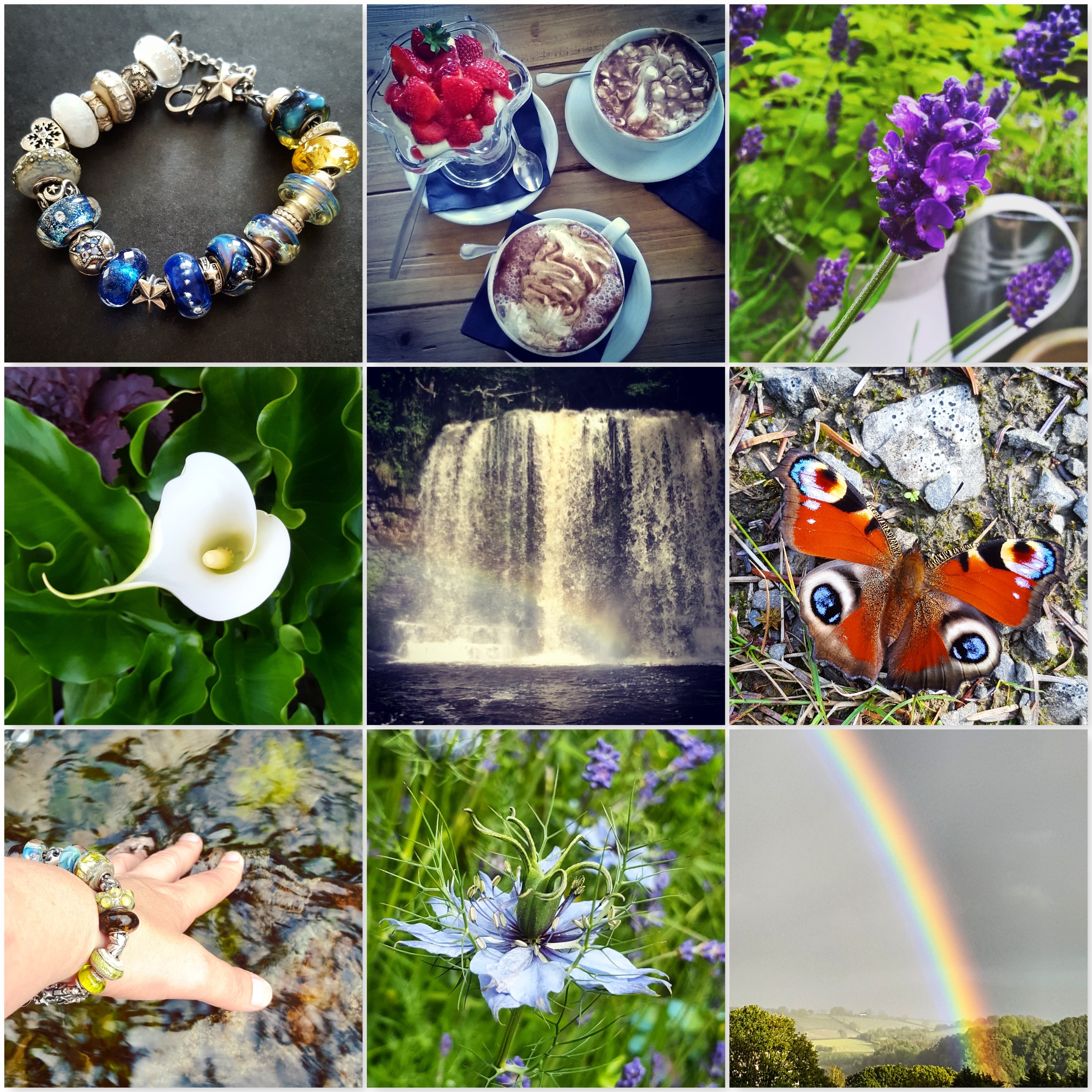
I wear different bracelets in each season; this one representing winter to summer looks great in the hottest season – keeping me cool with its frosty white beads, dark night indigoes, leading to summer sunshine with lemon amber. Strawberries are always a summer favourite, and the flowers that bloom in June and July – lavender, the arum lily, and nigellalove-in-a-mist fill my yard tubs. Butterflies and dragonflies flutter by and my favourite is the peacock butterflyWaterfalls and messing about in rivers will cool you, and rainbows light up the sky in summer showers.

Magical Colours of Summer - summer colours - the last krystallos

© Lisa Shambrook

I usually spend summer berating the heat and counting the days ‘til autumn,
but I’m trying to embrace the warmth of the summer sun…

What are your favourite things about Summer?